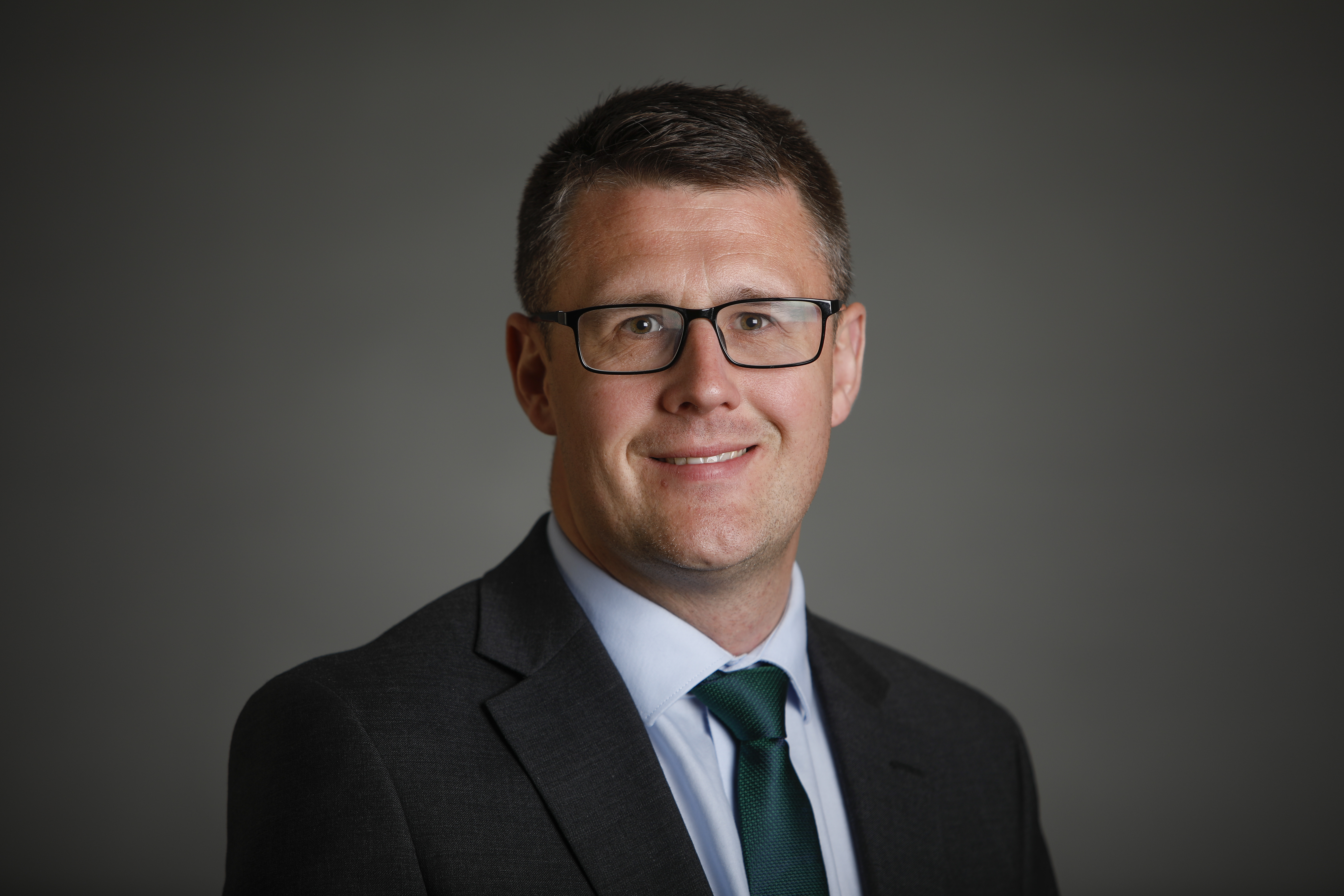
You did not quite address the question that I slipped in about the current state of morale. I think that we are all aware of what it is, but I would like you, as the chief inspector, to give us a summary of the current morale of Police Scotland.
Craig NaylorHM Inspectorate of Constabulary in Scotland
We speak to a very small number of police officers and staff across Scotland, but the commitment that they show, and which they tell us about, on a daily basis is inspirational; they are still out there, pitching away even when they are under pressure, and I take my hat off to them. I was a cop once, too, and I loved to chase around with the blue light on the roof of my car.That is what we still get—the police are still committed to the job and are still working hard to deliver a service. However, they are under increasing pressure, whether it be, say, from call volume demand or managing sex offenders. Indeed, the number of registered sex offenders will probably hit 10,000 in the next year or two, and there are 400 dedicated officers to manage that situation. It is the growth in demand that is hitting them hard.
Absolutely. A lot of them are worn down by what is expected of them, the number of rest days outstanding and so on. Indeed, we have been repeatedly told that the sick leave absence rate is 10 per cent.I would love to talk to you about Tasers another time. We have to protect our front-line police officers, but we are way behind the rest of the UK when it comes to officers who are trained to use Tasers. However, that is probably for another day.For the moment, I want to turn to Karyn McCluskey and ask her where the money is going to come from for the roll-out of GPS monitoring of people who are on early release, who have bail and release conditions and so on. We have heard a lot of talk about it, and it is being held up as a great hope, but in many ways, the more you look at it, the more issues you can see with it. So, my number 1 question is: where is the money coming from?
It is the Scottish Government that holds the contract, not us. We are very involved in electronic monitoring and in trying to improve the system. You are quite right—it is a legitimate tactic to help ensure compliance, particularly for the challenging people out in the community who need extra support around them. In any case, it all has to come with support. You cannot have the technology alone and then expect people to comply.
Well, it is really interesting. We do not have a long-term vision for justice, and that is one of the big things that we need. What do we want justice to look like in 10 years’ time, and then how do we get there? Spending commitments are being made without that long-term vision being in place. We need to think about what the steady state will be in 10 years’ time. How many prisons will there be? What will be happening in communities? Where are we going to invest?You are right about electronic monitoring. At the moment, we have some very old technology—radio frequency technology, it is called—but that is really just used for curfews. We do not have GPS technology, which is very advanced and is particularly useful in domestic abuse cases—Police Scotland is dealing with a huge number of those—and we also do not have alcohol monitoring, even though we have a lot of alcohol-related crime.There will need to be substantial investment, not only in the technology but in support, and particularly for the third sector, which will need to support people in complying. I do not know where that money is coming from; I do know that the cabinet secretary and the justice directorate are very involved in all of this, but it is beyond my knowledge exactly how much money they are going to put into it.
There are all kinds of tools, such as GPS, and all the paraphernalia that goes with it, and there are issues in relation to technology that the police could use that is being used in other parts of the world, including other parts of the United Kingdom. However, that all comes at a price, and we are talking about flat cash settlements in both operating and capital budgets, so I am at a loss to see where the money comes from to fulfil any of those things. Your idea that there is no vision is obviously pre-eminent, because we are without a vision as to how we use all these tools to get to the stable state that you described—that vision has not been articulated.
It needs to be a long-term approach. There are savings to be made in the system. Mr Naylor has just talked about the paper-based systems. At the moment, the courts send out paper invitations to appear in court. Most of the people I know have moved five or six times before the letter is sent, and they do not open it anyway. It is 2026; we should be able to send things by email and digitally on WhatsApp, because that is how people communicate—
If I may just finish that point, Police Scotland has estimated that people failing to appear in court because they do not get the letter is costing them £10.5 million a year. Technology and digital systems that will save police officer time.
That was going to be my last question to Craig Naylor, and I am sorry that we have not had time to ask Stephn Boyle about this. Craig Naylor, the work you did this March on witness citations contained 50 recommendations, the biggest of which was to move to an electronic citation delivery system. I know that that recommendation is outstanding, but how many of the other recommendations are outstanding?
Craig NaylorHM Inspectorate of Constabulary in Scotland
Good morning—actually it is the afternoon. Thank you for being here. Stephen Boyle, in our budget considerations, we all have a sense of the vision that Stephen Kerr alluded to: a justice system that delivers real value and better outcomes—or, to use Hamish Robertson’s term, stability—for people. Harm reduction and prevention are key to that. What questions or issues do you have in relation to how we assess whether spending on prisons, courts, community justice and victim support are aligned with demand, never mind delivering the stability or positive outcomes we want to see? What kind of assessments do you have of those matters?
Is the money being allocated to the right places but is it also being used effectively once it is allocated? Those are different stages, are they not? You can give somebody money and they can squander it, or you can give somebody money and they can use it wisely.
Yes, indeed. It is such an important question. Ultimately, you are asking how we measure whether the money is being spent well and whether it is delivering the required outcomes. I point the committee to two factors. Scotland made considerable progress with the creation of the national outcomes in the national performance framework, but that has somewhat run aground, particularly in the absence of good quality data and measurable metrics. I am sure that the committee knows that the national outcomes are imminently due for relaunch. I am not the first person to say this, but the connection between the budget that Parliament considers and the outcomes—and those outcomes being measurable—is of such interest to the committee because you need to satisfy yourselves that the money that is allocated can be measured and tracked and that, if necessary, changes can be made, during the year or in the following year.The other point to make, which the witnesses in the earlier round-table evidence session mentioned, is about accountability. At the moment, accountable officers for the various public bodies in Scotland are largely measured against the criteria applied to their organisation. We so regularly—and grandly, even—talk about collaborative leadership. Perhaps more than in any other public service in Scotland, in the justice system, you can see the interconnected nature of the service, but that is not really how we are measuring performance or incentivising leaders and boards in Scotland. Too often, performance is measured on an organisation-by-organisation basis. Much work and thinking has been done on evolving accountability so that we can genuinely move to a collaborative leadership approach, so that an accountable officer is not penalised if, for example, they overspend on their budget when they know that that could bring enormous benefit. Karyn McCluskey mentioned sums of money that could be released if the system ran more effectively, and some of those numbers are eye watering.We can track and monitor outcomes, and take a view on whether the outcomes are as intended, and that should be aligned with the budget documentation, and then more work that takes place more quickly is needed on accountability.
Linked to that, how can the committee challenge and ask the right kind of questions to ensure that accountability for the services delivered fits with a longer-term prevention agenda, which, as Karyn McCluskey alluded to, we know we have not achieved? How do we make those connections?
I am keen for more pace on that—that is easy to say. The vision for the justice system, including accountability, needs to be developed more quickly. So much is riding on the publication of the national outcomes, which is imminent, and I think that that will afford parliamentarians a much clearer route to scrutinise the budget decisions that you are asked to make.
Thank you. Craig Naylor, this question follows on from some of Stephen Kerr’s questions about staff psychological health and wellbeing. If we are serious about supporting our police service and other justice services to deliver the kind of support that we want them to deliver, what are the consequences of the gaps in relation to officers having the time to decompress and debrief after a traumatic incident and having the right levels of line management from experienced officers? We heard this morning that people are leaving the force early and that it is no longer seen as a 30-year career, because of the pressures. What are the consequences of the gaps, and how can we use budget decisions to fill them? Can we use budget decisions to do that, or are we missing something?
Craig NaylorHM Inspectorate of Constabulary in Scotland
To address your last point first, budget decisions and people must be seen in the same light. We have got to align better the understanding of what has got to be spent and the understanding of people and how they are affected by it. In recent years, we have touched on that in a number of reports, including the wellbeing report, the conduct report and “Frontline Focus: Tools of the Trade”, which talked about uniform and equipment and whether people are equipped correctly to walk out the front door of a station and do the duties expected of them.The psychological support is patchy, to be honest. On the services provided, I make particular reference to the Rivers centre in Edinburgh, which I have been aware of for a very long time. It provides exceptional highest level support for individuals who are dealing with cases that involve child sexual abuse, online exploitation and so on. It does an incredible job to keep those people well, but it is a small number of people who get that particular dedicated service.We see a real gap in the day-to-day supervision by experienced officers and staff, and we have called that out on many occasions over the past 10 to 15 years, because we need a better system that sets objectives at the start of the year, checks in on objectives and performance, wellbeing and integrity matters. All that management of a large workforce is difficult, complex and based on an information technology platform that is 20-plus years old and that does not really meet the purpose of managing a 23,000-person workforce in the 21st century.
That is quite a stark message. Are we measuring the right things when we talk about investment, staff wellbeing, digital integration and so on? Are we capturing what matters in relation to improving stability or achieving positive outcomes, rather than just measuring increased activity and reducing administrative burden or cost? Are we actually getting the right data?12:15
Craig NaylorHM Inspectorate of Constabulary in Scotland
We are getting better data now than we have ever had before. Over the past five years, Police Scotland and the Scottish Police Authority have gone on a journey on performance management. They introduced a balanced scorecard approach at the beginning of this financial year, and that is evolving. We see a much smaller document on outcomes and service delivery than we have ever seen before. Previously, it was 110 pages of data and charts that really did not tell you anything other than that there was a volume of work.However, we are not seeing the unmet demand, and that is the bit that troubles me. Where there is growth in demand on Police Scotland that cannot be addressed because no resource is coming with that additional demand, Police Scotland is starting to struggle. I have talked about the significant number of child sexual abuse inquiries, and the exponential growth in that is not coming with the resource to meet it. That is one of the ambitions that the chief constable has set out in her submission. To address that, you have to have the resources, whether that is for the covert policing side, the operational policing side or the wellbeing catch-up when you do it. That is just one of many areas of growth that are not about having yellow jackets on street corners dealing with the public.I go back to a point that Sir Iain Livingstone made when he was chief constable. He said that, in the 30 years of his career, as has happened during my career, we have moved from policing street corners with yellow jackets to doing that in a more effective manner, to doing it with a public health approach, to dealing with what happens behind closed doors, with the growth of domestic abuse cases over the past 20 years, to now policing the internet. How do you put a virtual yellow jacket on the corner on the internet or on a dark web server? That is incredibly difficult, and that demand is growing exponentially. It is very unseen, but that unmet demand is massive.
David LindenSNPThe Convener · Glasgow Baillieston and Shettleston
Karyn McCluskey talked about the increased pressures on community justice despite the increasing funding. Indeed, we have seen that community justice social work funding has actually decreased. What are the consequences? What changes can we make to commissioning and accountability that would allow better use of the stretched resources? Are there such changes, or have we made the changes that we can make?
We want more people in the community. We want a community-first approach, where it is safe to do so. However, expectations on more people and more complex people—we have talked about homelessness and mental health issues—and capacity need to move together. We cannot expand the number of people and the complexity and just expect people to expand to fit that. We are dealing with longer sentences and more unpaid work. We also need different sentencing options to deal with people in the system who have really complex needs, to allow us longer to work with people and get them to a more stable place.When I was at the committee previously, I think that I mentioned the issue of what the outcomes look like. Of course, there are a variety of outcomes. We absolutely want reduced offending, but we also want people to remain stable in their housing, to engage with treatment and support and to participate in education and employment. No single measure will tell the whole story but, at the end of it, there will be fewer victims, which we really want, and a smaller justice system. However, that will require investment elsewhere, which is really challenging. People do not always think about prevention, because it seems amorphous, and we seem unable to put our finger on it. We think, “Well, it’s jam tomorrow.” However, it is not jam tomorrow; it is fundamentally about public protection and fewer victims.
David LindenSNPThe Convener · Glasgow Baillieston and Shettleston
Good morning. I will start with Stephen Boyle, who I hope can help us to help the Government. If you were advising ministers on the 2027-28 budget, what three changes would you say would deliver the greatest long-term improvements in justice outcomes?
I will caveat my answer by saying that, of course, I am not an adviser to ministers or Parliament, and my role is independent from both. I guess that that affords me the opportunity, through the work that Audit Scotland does and through the value for money audits that we do, to make evidence-based comment on our audit of individual public bodies.As I mentioned to Maggie Chapman, this is clearly an integrated system, and I do not think that the way that we are incentivising leaders is allowing for some of the preventative, impactful change that Karyn McCluskey referenced.We need to review accountabilities, and we need to look much more closely at intended outcomes when you are scrutinising the budget. With regard to the third change that you asked for, I should have mentioned it earlier, so I am pleased to get the chance to mention it now: it is encouraging a more medium to long-term approach. Yes, perhaps it is about multiyear budgeting, but it is also about multiyear financial forecasting. The Scottish Government has been in a rhythm of producing medium-term financial strategies; it has not done so this year and has referred to variabilities and complexities, with today’s UK budget being a very significant one. However, it remains my view that, regardless of the circumstances, a medium-term financial strategy is an important feature to support parliamentary scrutiny of spending decisions. As I said to the previous Finance and Public Administration Committee in evidence, there will always be variables that, inevitably, mean that the medium-term financial strategy that a Parliament is considering will not have the same numbers that end up being reported in the Government’s accounts in years to come. However, the strategy gives you a better chance to scrutinise and to support the Government to make decisions. That is why I recommend that that medium-term financial planning and parliamentary scrutiny are features of budget setting, year in, year out, regardless of what variables are at play from one year to the next.
I would not like to pin that on a particular area. Our audit work is evidence based and leads to recommendations; for example, I mentioned the joint audit inspection that we did with HMICS colleagues. As I have said many times in evidence to the Public Audit Committee, the vast majority of public bodies spend the money well: they do what is there to do within the circumstances in which they find themselves. Forgive me for repeating the point, but accountabilities is an area that is not leading to optimal spending or encouraging collaboration, because people do not access public services on a public body by public body basis. They just want the services that they need at that time, and those can come from a range of partners. Looking at accountabilities much more closely will really help that. To tee that up, through our audit work, we are looking at a range of areas of spending.One of the areas that has been referenced a couple of times already—I know about it particularly from the narrative and communication from Police Scotland—is the impact that mental health services have on the demands on the police service. We previously covered some of that work in our adult mental health report. As I mentioned, the next report from us will be on the joint audit inspection of the Scottish Fire and Rescue Service estate arrangements. That allows us, through our work, to make recommendations, give assurance and follow up on progress.
Thank you. I will move on to Karyn McCluskey. Do you agree that the community justice capacity is not keeping up with the ambitions to reduce the prison population? What scale of investment is required to fill that gap?
It cannot do so at the moment. According to Audit Scotland’s report, community justice gets a third of the overall budget that prison gets. We are judged to a different standard. We know that offending is greater when people leave prison, and 6,500 people are there for sentences of under 12 months. If we really want to change that, we will fundamentally have to shift resources into community justice. That is not just about justice social work, but about those hyperlocal, third sector services that can really meet people at the earliest point in the justice system.Stephen Boyle is absolutely right—our budgets are fragmented. The community justice partnerships are not statutory, so they can convene everybody around the table, but they cannot pull budgets. SCTS talks about cases, and Police Scotland talks about police reports, but these are people who are going through the system, and we need to have a no-wrong-door approach. If someone comes to our door with mental health or homelessness issues, we try to deal with them at the earliest possible point.However, the answer to your question is no, it has not kept pace. I do not think colleagues were very happy at my mentioning that, under the Sentencing Act 2026 down in England and Wales, an extra £700 million had been moved into probation services to cope with the reduction that they wanted to make in the prison population. Obviously, it will not be like for like, but we will need to be looking at something on the scale of £60 million or £70 million to try to achieve that level of change here.
What would be the risk if we had prisoner numbers falling but the corresponding investment was not in place? I should say that I very much agree that we need to move to having much more preventative spending than we have just now.
We deal with risk, and with incredibly complex people. The people going through sheriff and jury courts and the High Court are going to end up with very significant sentences, but often we are talking about those who have been in and out of prison, having served life sentences or short-term sentences. These are the people who are committing lots of the shoplifting, which I know is an issue that members have raised before, and other low-level crime. It is all about quality of life. It is really challenging, and we need some really skilled people to manage them in local areas, because this is not something that you can give to somebody just brand-new, off the shelf.These people lead complex lives and often they do not trust some of the services that we have, so you also need some really good third sector services, because they can get to those places that the public sector cannot get to. They are also often cheaper—and I hate to say that, because we are an expensive resource.That is the scale of investment that we are talking about. I have already referred to the SCTS’s great piece of work, showing that 2,900 people are responsible for 25 per cent of all the court hearings.
The SCTS said that 2,900 people were responsible for 25 per cent of all the business in the courts. That is extraordinary. They also accounted for almost 50 per cent of all the warrants—and we have thousands and thousands of warrants. These people have a huge impact on public finances. They are costing us a fortune. Please forgive the gendered language, but we could almost man-mark them to get a better return on investment than we are getting right now.
Good afternoon. My first question is for Stephen Boyle. I read with interest your previous comments about the lack of measurable outcomes, and you have talked about that today in some detail. In fact, when I was reading your comments, I was asking myself, “How does the Scottish Government know what’s value for money? How does it justify its spending decisions?” Therefore, my question for you is this: what information should the Scottish Government be publishing annually to enable the Parliament to assess whether justice spending is achieving its intended outcomes?
Good afternoon. Audit Scotland and I have commented regularly on the need for a much clearer connection between public spending and outcomes. How do we, as a country, do that at the moment? Our outcomes are largely set out in the 150 or so public bodies’ annual reports and accounts each year, so you would, as I and my colleagues do, have to read them in order to come to a system-based view. However, that is really difficult for the Scottish Government to do. Its own consolidated accounts and performance report go some way towards that, but they cover health, social care services and all the other parts of public service, so it is really difficult.That is why we were positive about the steps that the Scottish Government took with regard to the national performance framework and thenational outcomes. It sought not just to connect in a better way the outputs from public spending, but to look at the difference that that spending was making. Was it not only delivering value for money but making a difference to people’s lives? However, the framework got somewhat stuck when its ambition outstripped the practical realities of what supporting data was available.Not to give advice, but I recommend starting with the data that you have and ensuring that it is robust and can be scrutinised and reported on, so that the Parliament and the public have a clear idea of what is making a difference. If it is making a difference, that is great—you should do more of it and spend more money on it; if it is not, or if the difference is not measurable, you should challenge whether that is the best place to spend public money.12:30Forgive me for repeating myself, but accountability is so important—it is about how we are tasking Scottish public service leaders to perform against the incentives that we create for them. I am not sure that I align with some of the narrative. We regularly talk about collaborative leadership and systems and solutions being in the hands of leaders, and my assessment of that is, “Yes—but”. There is much to do, but the awaited relaunch of the national outcomes will give the Parliament a much clearer sense of whether the ambition to align outcomes with spending can be realised.
Drugs and drug support interventions, because of the volume of people. As someone who also chairs a rehab centre, I believe that trying to get people out of substance abuse would have the biggest impact. Of course, we could consider homelessness, but you have asked about an intervention. If you hang around the courts, as I do frequently, you see that the people who are there are absolutely in the grip of addiction. Drug support is not a justice thing, although I would argue that it is.
Police Scotland defines the risk to public safety through a tool called the management of risk in law enforcement—MORILE. I am going to do him a significant disservice, but DCC Stuart Houston was briefing me on it yesterday afternoon and the greatest risk to public safety is from online child sexual abuse and exploitation, which is double the level of risk that is posed by drugs in our communities. We have significant issues with drugs, particularly synthetics such as nitazenes, and the number of deaths associated with drug abuse is not changing in a positive direction.When we look at that, we start getting into organised criminality. Over the weekend, there was a shooting at a pub in Edinburgh, and there are all sorts of issues with feuds between various people—I am sure that committee members have heard of operation portaledge. Those issues are at the high end of the threat radar, along with counter-terrorism and foreign state actors. They are resource intensive and are playing out increasingly in the prosecutions and indictments from the Crown Office. Three years ago, about 800 or 900 indictments were raised for the High Court and sheriff and jury courts whereas, this year, there is an expectation that there will be 2,700 indictments, so there has been a growth in the cases that create the highest demand and the really complex cases. To me, the system is working as well as you could expect when the growth in the high end is being tackled effectively, but it leads to other areas not working as well as they could.It is a misnomer to describe the criminal justice system as a system; at times, various parts join together that have different IT systems, different expectations and different outcomes. To respond to Karyn McCluskey’s point, if we could address the individual needs within the systems, fewer people would come into them, particularly those on the lower level who are bouncing around sheriff courts and district courts and serving short-term sentences. They will be the high-end criminals of tomorrow unless they get an effective intervention. MORILE is a scientific tool that has added huge value to how Scotland polices its organised criminality and state threats, which are massive.
David LindenSNPThe Convener · Glasgow Baillieston and Shettleston
Mr Naylor’s response to Amanda Bland has answered one of my questions, but I want to pick up on some of the points that others have raised.Cara McCluskey, in one of our predecessor committee’s pre-budget evidence sessions, you recommended a specific figure for an increase in Community Justice Scotland’s budget that would have a real impact on its capacity. If there is something that you want to relay to the committee in that regard, I would be interested to hear it.You also made powerful points about the impact and vulnerability of the third sector. At the moment, the Government is trying to implement three-year funding for the third sector. That would be transformative in a number of ways. Do you want to say more about that, given your remarks at the beginning of the meeting regarding people being put on notice and recruited on a cyclical basis?
I do not want to talk about our own budget, because that seems slightly banal when the challenges that front-line partners face are so significant. We are well past the time when the third sector part of the community justice work that we do should be viewed as a nice-to-have. Those groups are critically important, but, at the moment, they get the rounding up after everybody else has got their budget. Police Scotland’s work on arrest referral absolutely relied on the third sector. However, those services have gone, so all the work that was happening in arrest referral in some areas has disappeared because the third sector has not been able to sustain its work.I work with lots of third sector groups. They used to have six months’ worth of reserves, but they are now down to three months’ worth. They are getting squeezed more and more. A huge number of people in those groups earn a pittance in comparison with what people get in some of the public services, yet they are expected to deal with things that, often, the public sector would not deal with. They deal with risk, meeting people coming out of prison and so on, and they work with incredibly complex individuals. However, as I said, many of them will be getting redundancy notices in January because we just do not know where the money will come from.There needs to be three-year funding. I know that you spoke to Lynne Thornhill from UpSide this morning. Community Justice Scotland made a case for UpSide’s funding to be three years plus one plus one, which is almost like a five-year funding cycle for that work. That would enable us to continue to employ those really skilled people who can deal with early release and all the other things that we have thrown at them. It is also important that that funding arrangement keeps pace with inflation. There have not been inflationary rises in the funding, which means that, as the years go by, the money is worth less and less. That would not be a suitable arrangement for public services, and I do not see why it should be suitable for the third sector.
Mr Boyle, in session 5, I was a member of the Justice Sub-Committee on Policing. One of the bits of work that it did concerned a consideration of the fallout from the failure of the i6 information technology project. I know that Audit Scotland has done quite a bit of work on that, including a report in March 2017 that identified the loss of £200 million in savings as a result of the collapse of the scheme and another report in March 2023 that emphasised the need to deliver police IT requirements. I raise that issue because some points relating to that have been aired in your remarks and those of others today. Can you comment on progress that has been made since that report in 2023?
With your agreement, I might ask Craig Naylor to say more about the nature of the digital progress within Police Scotland. First, though, I will make a wider point about digital that echoes Karyn McCluskey’s point. As we move into the modern era, Scotland’s public services are still using very dated IT infrastructure that is not fit for purpose, is not efficient and harbours cybersecurity risks, as we can see from examples from the past week or so concerning the advancement of artificial intelligence and the threat that that poses to organisations’ websites. The issues that are raised by that represent a daily challenge for organisations in the public and private sectors. Almost all organisations will have digital security as their number 1 risk, but they still need to invest and make the necessary transformational change.The i6 project might be an example—among others around that era—of public bodies not delivering successful IT investments. It was actually one of the more benign examples, if I can use that term, because the issue was not necessarily about a public sector failure, as there were challenges with delivery on the part of a supplier. However, public bodies will have to get over some of their angst about investment in IT, because it is vital for the public service reform agenda, fiscal sustainability and the delivery of better outcomes and experiences for users of public services.We recognise that we have a role in that, too. The last thing that Audit Scotland wants to do is position itself as an organisation that is seen as inhibiting innovation and drive. There has to be change and investment. Policing, justice services, courts and tribunals—all the organisations that this committee looks at—need to continue thinking about their IT investment. I am quite sure that that will be part of the scrutiny that this committee and Parliament carry out over the months ahead.Craig Naylor can say more about the specific issues with regard to policing.
I agree with Stephen Boyle’s comments. The i6 issue was less about public sector delivery and more about supplier delivery. I do not want to go much further on that.The justice system must be joined up through the delivery of a future IT platform. I know that Malcolm Graham has spoken about that, and I am very supportive of what he is trying to do. However, the fact that budgets are set within silos—the police get a budget, the courts get a budget, COPFS gets a budget—means that people struggle to cut across those silos in order to deliver an IT platform for the whole system. That is one of the historical problems that we face. As Stephen Boyle said, we are still dealing with systems that are 10, 15 or 20 years out of date. However, it is expensive to invest in those things and the funding cannot be found within the current budget settlements in terms of the capital budgets of policing and other elements in the system.At the tail end of 2016, I went down to England to be deputy chief constable of a force that is about a tenth of the size of Police Scotland in terms of its budget, resource and everything else. My capital budget was exactly half of what Police Scotland’s capital budget was at that point. However, within a year, we delivered our new crime system, which was called the Niche regional management system. Shortly after that, we delivered a mobile data platform with 28 applications that produced on a digital device every operational system that a police officer needs. We did that 10 years ago because I had the ability to move capital into that sort of spend-to-save environment, which allowed us to build the first two-way interface that we had ever had with the Crown Prosecution Service. That allowed the data to move digitally, rather than being delivered on paper or, in the case of digital exhibits, on a data stick.The ability to do that involves having a joined-up approach; it cannot just be down to single organisations designing, delivering and implementing their own systems. The work must be done on a system-wide basis. Thought must also be given to other systems that the new system can engage with, such as those in health, as policing systems must engage with systems around mental health, group-based child sexual abuse and exploitation and so on. Thought must be given to where those interfaces happen and to how we can ensure that the general data protection regulation is satisfied and that, to go back to Karyn McCluskey’s point, information is shared in a way that recognises the individual who should be at the heart of the system.
I am sure that we could go on for a lot longer, partly because you guys are incredibly knowledgeable and we want to delve into the issues that have been raised, but I am afraid that we are out of time. I thank all three of you for the evidence that you have given us today—it has provided much food for thought. I am sure that many of the issues that you have raised will find themselves forming our line of questioning next week, when we have the Cabinet Secretary for Justice and the Cabinet Secretary for Public Service Reform in front of us. You may now leave the room.As the committee dealt with item 3 on the agenda earlier, I now move the committee into private session.12:45Meeting continued in private until 13:14.
The type of each item (debate, statement, questions, members’ business and so on) and the times shown are worked out by this site from headings, the chair’s opening words and the Official Report’s running timestamps. They are not the Parliament’s own classification. Text: the Scottish Parliament Official Report.
 link