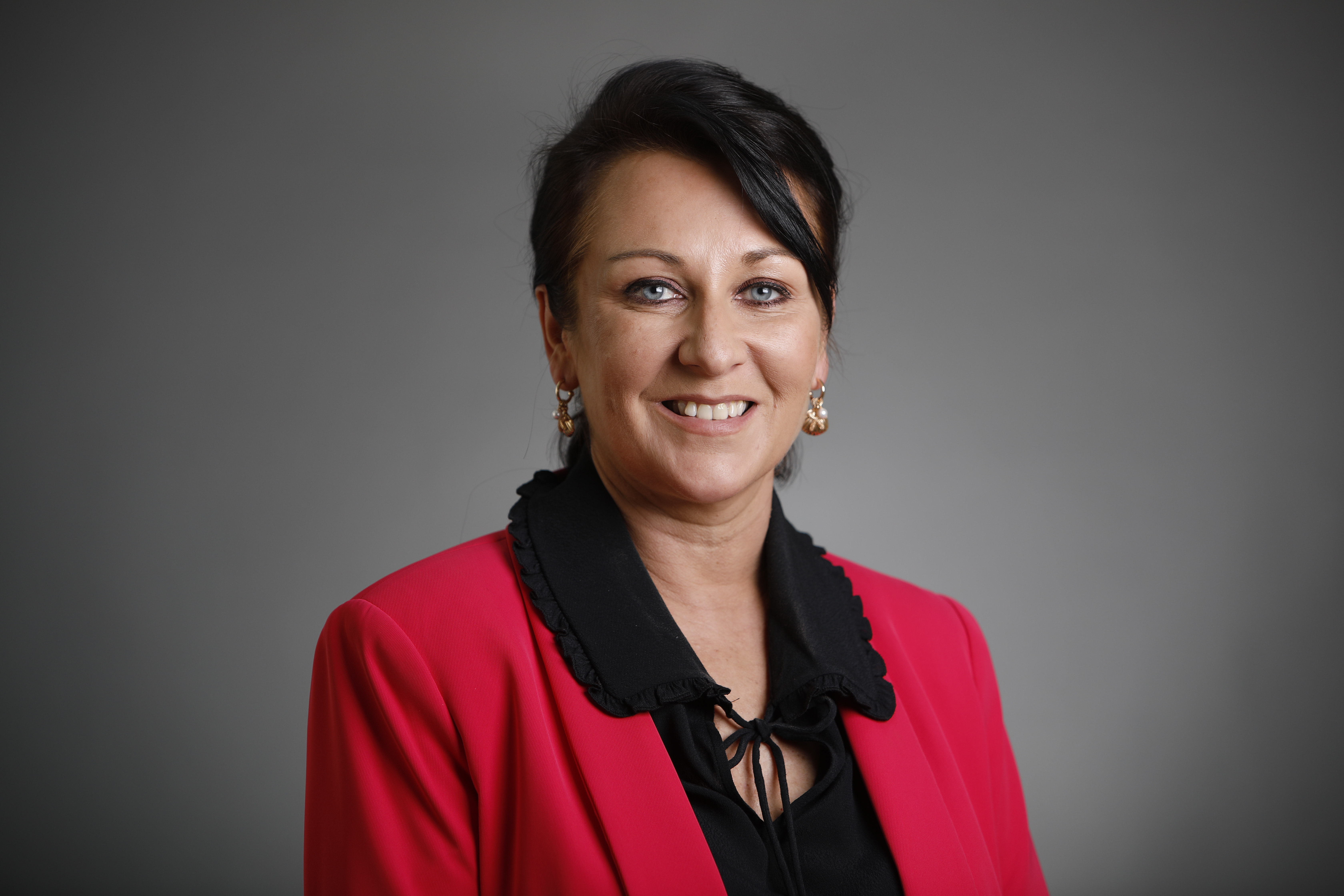
Thank you, Presiding Officer, for giving me the time today to bring to the chamber my first members’ business debate. Less than a year ago, I never thought that I would be standing here as the first woman of colour to be elected to the Scottish Parliament. Having come from a very modest family background, I am well aware of the importance that benefits can have in supporting families at times of unemployment and redundancy.
I put on record my thanks to the research team at the Medical Research Council and to the chief scientist office, which funds the social and public health sciences unit of the University of Glasgow, which is based in my constituency. Glasgow university has a long pedigree of developing and applying the latest methods of multidisciplinary research, in order to identify mechanisms that can bring about change, and of developing and assessing policies and programmes to improve health and reduce inequalities.
The motion in my name is based on research that was recently published in the Journal of Social Policy by Drs Marcia Gibson, Serena Pattaro and Nick Bailey. I hope that Marcia and Serena will shortly be able to join us in the public gallery to hear the debate.
That research was one of the most comprehensive reviews of the international quantitative research evidence on the labour market and the wider impacts of benefit sanctions. The body of qualitative research has already established that intensified sanctions and conditionality have had important implications for public health and health inequalities. The new scoping review reported positive impacts for employment, but the research also reported negative impacts for job quality and stability in the longer term, along with increased transitions to non-employment or economic inactivity.
Today, I will focus on three important issues that arise from the study. First, benefit sanctions mask the impact that they have on children and young people through no fault of their own. The United Kingdom Parliament’s Work and Pensions Committee reported in 2018:
“Children play no part in a failure to comply with conditionality, yet when a sanction is imposed they feel the effects just as acutely.”
How can anyone penalise a child because of the consequences of a parent or guardian’s actions, over which the child has no control? It is heartening to know that the Scottish Government took a different path when employment services were devolved. Gone were the mandatory schemes and in came the new Scottish approach of dignity, respect and fairness, in order to improve outcomes.
My second issue concerns benefit sanctions and a subsequent reduction in welfare payments. They are a false economy and often hide the true cost to Government of increased crime, poorer physical and mental health and an increased need for social care. The wider impact that poverty has on individuals, families and communities can manifest itself, for example, in family breakdown and, sadly, an increase in the number of children entering the care system.
Sir Robert Devereux, the former Department for Work and Pension permanent secretary, admitted as much when he was asked whether the reduction of the welfare budget under his watch had led to increased costs for other Whitehall departments, such as health and justice. He did not know. He was concerned only with reducing DWP spending. Therefore, while the DWP was being rather smug at its success in cutting welfare costs, other departments were faced with picking up the pieces and paying heavily for it. Who knows what the true cost to society is? Members just need to think about the huge rise in food banks since benefit sanctioning really took off.
The third issue that I will focus on is a request—actually, it is a demand. The DWP needs to give researchers access to data in order to ensure that there is robust independent scrutiny of the results of benefit sanctions. How many sanctions have been issued? How long are they? What impact have sanctions had on job searching activities? What was the quality of the jobs that were found? How long did they last? How many people took a low-quality job in order to escape that draconian regime? Originally, sanctions could have lasted anything from six months to three years. Although Amber Rudd reduced the maximum time to six months, that is still a longer sentence than people receive for some criminal convictions.
I draw members’ attention to the 94 reviewed studies from across the world. What would give us the 95th? The UK releasing appropriate data to allow independent research to be conducted. Today I have written a letter to the Secretary of State for Work and Pensions, calling on her department to promptly grant access to anonymised data from the claims and sanctions histories of the Department for Work and Pensions to the research team in Glasgow so that its inquiry can be completed. I encourage my colleagues across the chamber to add their names to that letter, which I will issue shortly.
Since 2010, the coalition and successive Conservative Governments have claimed that the Government has been helping people to find and use open Government data. However, despite numerous requests, freedom of information requests and assurances given to successive work and pensions committees that such data would be released, it is still not available. I ask myself why. What is it that they do not want anyone to find out? Why would they not want robust independent scrutiny to validate their evidence and confirm their success?
This Parliament has debated the impact of benefit sanctions for nearly 10 years now. Despite a Scottish approach, new voluntary employment support services and the new Scottish child payment, the management of social security support for the unemployed is reserved. Reserved it may be, but the sanctions have a knock-on effect for the Scottish Government.
It is time for us to be open with our data. It is time for the UK Government to step up to the mark and be open with its data. Only then can we truly learn from its analysis of what works, what does not work and—literally—who pays for failure. Once again, children bear the brunt of adult decision making.
I look forward to contributions to the debate from across the chamber.