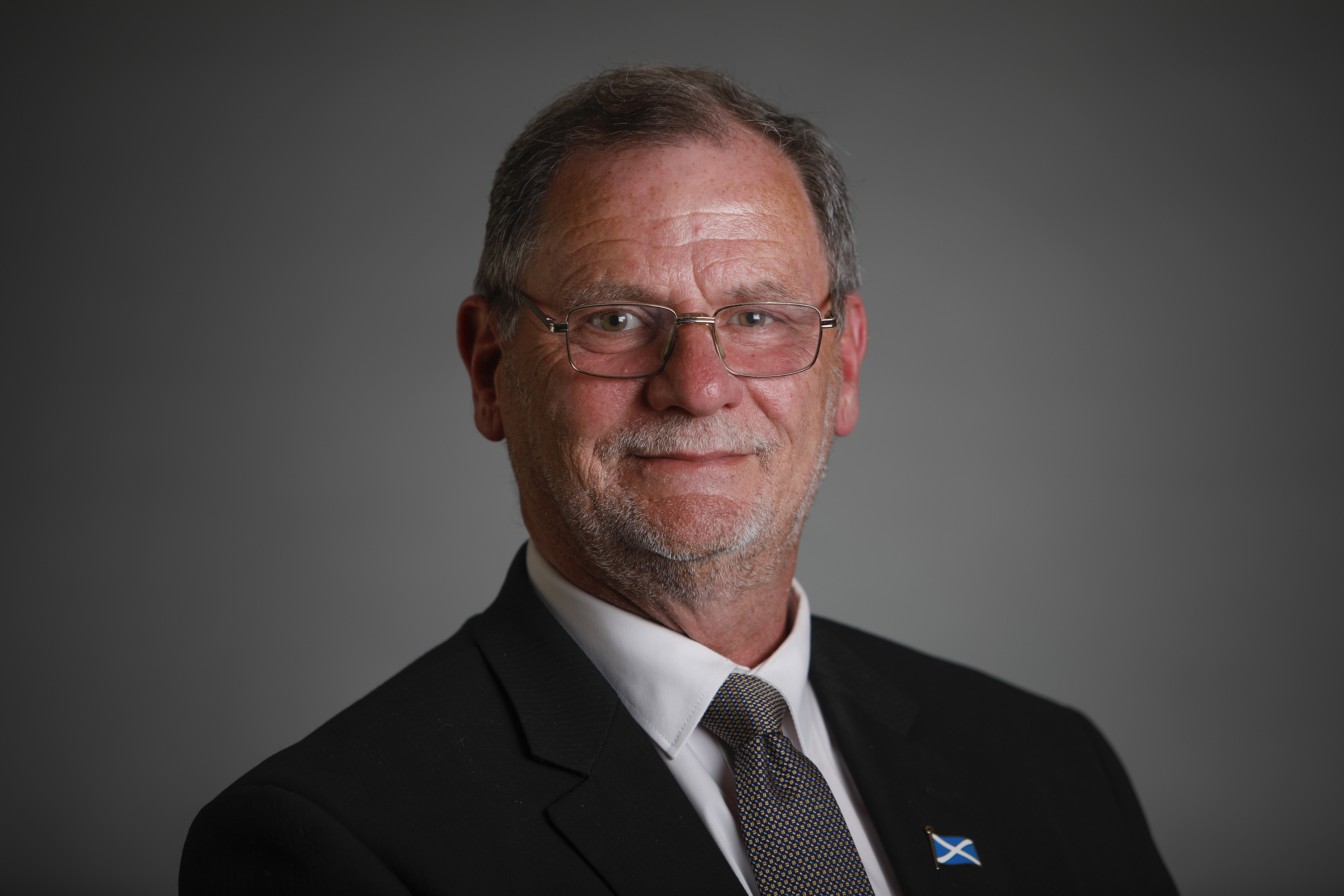
Good morning. Thank you for asking the RIAS to take part in the session. I have a minor correction: I am director of a practice, 7N Architects; I am not a director of the RIAS but a practitioner who speaks on its behalf.As an architect, I see the process from a project’s inception, through the planning process and right through to delivery. The key observation that I want to make this morning is that the issue is not necessarily planning; the issue is currently the whole system.The RIAS is very supportive of the principles that were established by national planning framework 4, its ambition and all the good things that it includes about making our country’s towns, cities and villages better places. However, projects not being viable is a huge challenge at the moment. We work across the private sector, across the public sector, with councils and with housing associations, and it is fair to say that every project faces huge delivery challenges and a lot of them are stalled.I checked yesterday: in the past five years, our practice has gained consent for 9,000 homes in Edinburgh alone, and every single one of those homes is currently stalled because of viability challenges. One of the principal reasons behind that is infrastructure issues. NPF4 is rightly very strong on the principle of having infrastructure first—you put in your public transport, you put in your civic transport, the development funding, the schools, the parks and all those things, which is the right approach.However, our experience at the moment is that the system is no longer working when it comes to the things that development needs to fund in the public and private sectors. We are in the middle of an acute housing crisis, so that is a huge challenge, and it will be a challenge for more homes Scotland when it gets under way in the coming years.There are two issues. Principally, there has been a huge increase in construction costs in the past five years—it is around 30 per cent—which is hitting every sector. Secondly, there is the increasing regulation, requirements and standards. I want to make it very clear to the committee that the RIAS is certainly not advocating cutting red tape and having a bonfire of all those things, a lot of which are important and necessary. A lot of them, such as increased fire regulations and increased standards for insulation and heating, are reactions to the Grenfell tragedy. Those are the right things to do.However, if I were looking for one single thing to change the system, it would not necessarily be a policy, because, in a way, all the policy levers are already there. It is more to do with our perspective on what we are trying to achieve with all this. It is not really a silver bullet that we need, but more a silver telescope. How do we look at all this from a different perspective? My experience of being an architect for a number of decades is that, traditionally, planning acts as a gateway. You could say that it is a dam to control the flow, ensure the quality of what is delivered and ensure that it is in the right place, and protect communities.Right now, though, there is so little flow in the system that the issue is how planning can be part of a whole-system approach that allows things to flow freely, irrigates the land in a way that encourages good stuff to happen and creates the kind of places we all want to live in and want our children to inherit from us, while still stopping the bad stuff. That means a change in perspective all the way through the process. For example, Edinburgh, where we do a lot of our work, has a brownfield-first strategy to discourage development in the green belt. That is the right thing to do, but it does not recognise that there will still be severe development pressure on greenfield or green-belt land, simply because it is much cheaper to develop. It costs more to develop brownfield land, because you might have to deal with contamination, get sustainable drainage to work on a tight site and, perhaps, install green-blue roofs, and it can involve denser construction and pile foundations. However, if the country is looking to build sustainable communities, we need a level of density, particularly in the cities, that sustains public transport, local services and everything else. Section 75s have a strong role to play in that.As I mentioned at the start, it is not necessarily about new policy but about using the policy that we have differently, with a different state of mind. In Edinburgh, for example, if you develop an urban site next to the tram, you pay a tram levy. If you design a development with very low levels of car use and car parking, and predicate it on public transport, you pay a premium for doing that, but if you build on a greenfield site that is very low density and entirely served by cars, you do not pay anything. We could talk about fiscal measures to tune the market to doing what is needed by communities, but getting something like that through this Parliament or Westminster is a long, long road. Arguably, though, section 75s could be far more readily tuned to local circumstances by a planning committee or a council committee. My key point on behalf of the RIAS is to advocate for looking at a whole-system approach to meeting the challenges.
 link