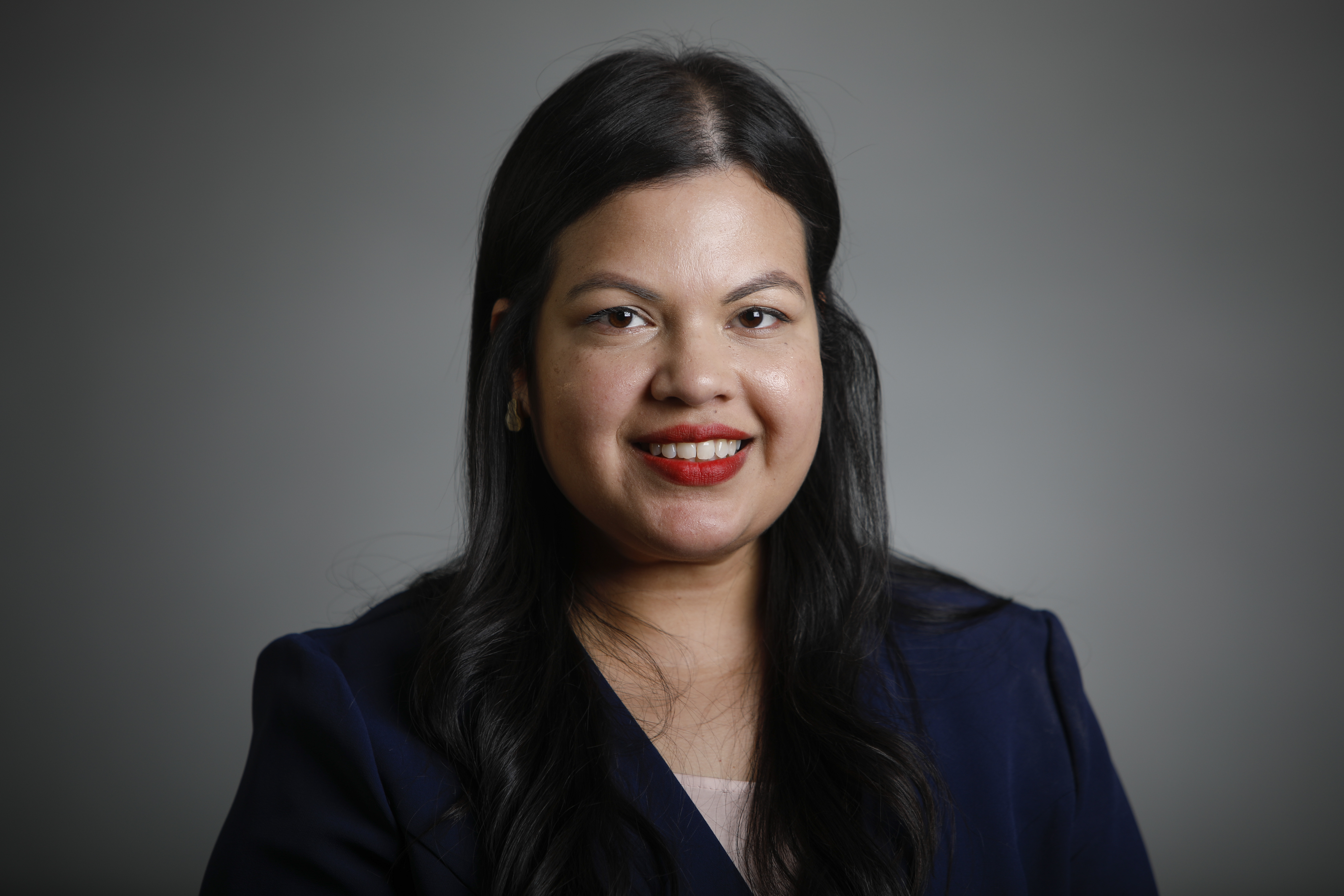
It really is an honour for me to open the debate, not only as we mark 25 years of black history month in Scotland, but as one of Scotland’s first black MSPs, alongside my Scottish National Party colleague Michelle Campbell MSP. While we may perhaps lament that it took seven sessions of the Parliament to see a black MSP elected when England had elected a black member of Parliament 13 years prior, before we first sat in this chamber, I am thankful, now more than ever, that we have diverse voices around the table. I thank colleagues from across the chamber for supporting my motion and colleagues from the Labour Party for swapping their members’ business debate slot so that we could have this debate today.
Over the past 25 years, all kinds of organisations, communities and individuals have worked tirelessly to ensure that so-called black history is not excluded but told, highlighted and remembered. Such work was never simply about preserving our past but was also about challenging it; making it tangible and reminding us of the human stories behind it; highlighting misconceptions and breaking down barriers; and, at the very least, telling interesting stories that many may not have heard before.
Black history month honours the courage and sacrifice of those from days gone by and celebrates the generations of black Brits and black Scots who have helped to shape the country that we know today, while giving us all an opportunity to pause and reflect on what we want the Scotland of tomorrow to look like. Our history is not something that we ever leave behind—it continues to shape the world that we live in today and reminds us of how far we have yet to go. Today, therefore, let us do just that. Let us evaluate our past, present and future, because, in order to look at our past, we must be willing to acknowledge all of it—not just the parts that we are proud of, but the bits that continue to make us a little bit uncomfortable.
I was, like the rest of us, absolutely blown away by the National Theatre’s performance at the state opening of Parliament, which highlighted that. Although I am certainly not as talented as those amazing young people, their point remains salient. There is no disputing that the city of Glasgow—the city that I am ever so proud of, which chose to send me here, as one of Scotland’s first black MSPs—was the second city of our former empire. The street corners are adorned with the names of those whose wealth relied on the slave trade, and our history is deeply intertwined with suffering and pain. Yet, alongside that, we see a history of resistance and hope.
It was students in the city who organised at the University of Glasgow to formally petition the British Parliament to abolish the slave trade. Quite literally around the corner from my constituency office, the famous Frederick Douglass—yes, that Frederick Douglass—spent his time living and working to destroy the American slave trade. The same city gave the world its first international black football player in Andrew Watson, who in 1881, 245 years ago, debuted as a player for the Scotland team—a team that he would go on to lead and that, under his leadership, decisively beat the England team in the heaviest defeat that they have ever faced on their home turf.
James McCune Smith, the first free slave to receive a medical degree, did so in Scotland. At the height of apartheid, it was Glasgow that gave Nelson Mandela the freedom of the city. From more than 700 years ago, there are records of black ladies-in-waiting based around the corner in Edinburgh castle. Jessie Margaret Soga was a biracial Scot who, despite facing racial discrimination all her life, became a music teacher and a prominent suffragist activist in Glasgow.
Those are just a few names among thousands, who, like their fellow countrymen, worked to build a better future for all, no matter their race, subsumed in a sea of many names that we may never know nor hear about. I am sure that, like me, all those individuals, while they were made very much aware of their skin colour by racists and bad actors, saw themselves as no different from anybody else and, in many cases, were confused about just what all the fuss was about.
Colleagues, do we seriously believe that melanin levels can account for someone’s character? Do we believe that the colour of our skin holds us back, or is it the structures that we have allowed to discriminate? The names that I have cited make the history so very tangible, yet, 700 years on from black people sitting in our palaces, we are still seeing such discrimination every day. While today is an occasion for celebration and to reflect on our shared past, it would be remiss of me not to take the opportunity to speak on the realities of being black in Scotland today.
When I was growing up, I was told that things were getting better—that racism and prejudice would likely become a thing of the past and that my parents and grandparents had fought a battle so that I would not have to do so. I no longer believe that that is true. Things have got worse. The antiracist world that I thought we had secured has evaporated, and now it too often feels like content that we would have been uncomfortable seeing 10 years ago is part of everyday life.
This summer, we saw how ugly that hatred has become. We saw, in broad daylight, a litany of attacks on people just for the colour of their skin, accused of wrongdoing for being the wrong colour in the wrong place, and masked crowds marauding around our city and our towns, intent on causing fear and intimidation. That is not happening somewhere far away, nor is it happening in our history. I, alongside activists and some of my fellow regional MSPs, including my fellow MSP Holly Bruce, stood and watched as masked men threw up Nazi salutes during a protest at the weekend in Stepps. After generations of minorities fighting so hard to be seen as equals, it too often feels like we are fighting that same battle now.
We cannot ignore—although I have tried—the role that rhetoric from political actors and politicians has had in embracing and emboldening that. Just weeks ago, we had to watch as a former Home Secretary and now Reform MP tried to explain to a black man on television why he could never be English. Not too long ago, another MP said that she was sick of seeing black and brown faces on TV. Even in this very Parliament, we have heard a ridiculous challenge to the idea that we must teach our children not to be racist. I take particular offence at that remark. I found out that I was black when I was four years old, when another child used a racial slur against me. Racism is taught—it is not inbred—and we must fight every single day to destroy it.
Following my election, the dark corners of the internet lit up with glee at the idea of deporting me—the “remigration”, as they call it—despite the fact that not only was I born here, but my grandparents were born here, too. Let us be clear today, in the chamber, and remind our country that racism will never be tolerated and we will continue to fight for a better future together.
As we look towards the horizon and celebrate this black history month, let us all look beyond the past and present and towards our shared future. Perhaps, 25 years from now, a contemporary of ours will be standing here, lamenting 50 years of black history month. Perhaps politicians will still be using dog-whistle politics and racism to bolster their careers. Perhaps our streets will once again flood with masked men, and perhaps those with different skin colours will continue to cower in fear.
Alternatively, we can imagine a different future—a future where nobody is defined by their skin colour, where no group or politician thinks that it is popular to place communities against each other and where we no longer need to have a black history month, because our history is seen as shared and many centuries have gone by.
In my past, I was once a child who was made to feel as though their race would always define them. In my present, I continue to work to make sure that that is not the case, so that, in our future, no other child will feel the same. To me, that is the importance of raising black history month in the chamber. I have said before that I hope to live in a Scotland where black history month is no longer necessary, not because black history should be forgotten, but because it should be recognised as being just Scottish history. That is not the Scotland that we live in today—I know that from my own experience—but I hope that, in my lifetime, it is a Scotland that we will all build together.
 link