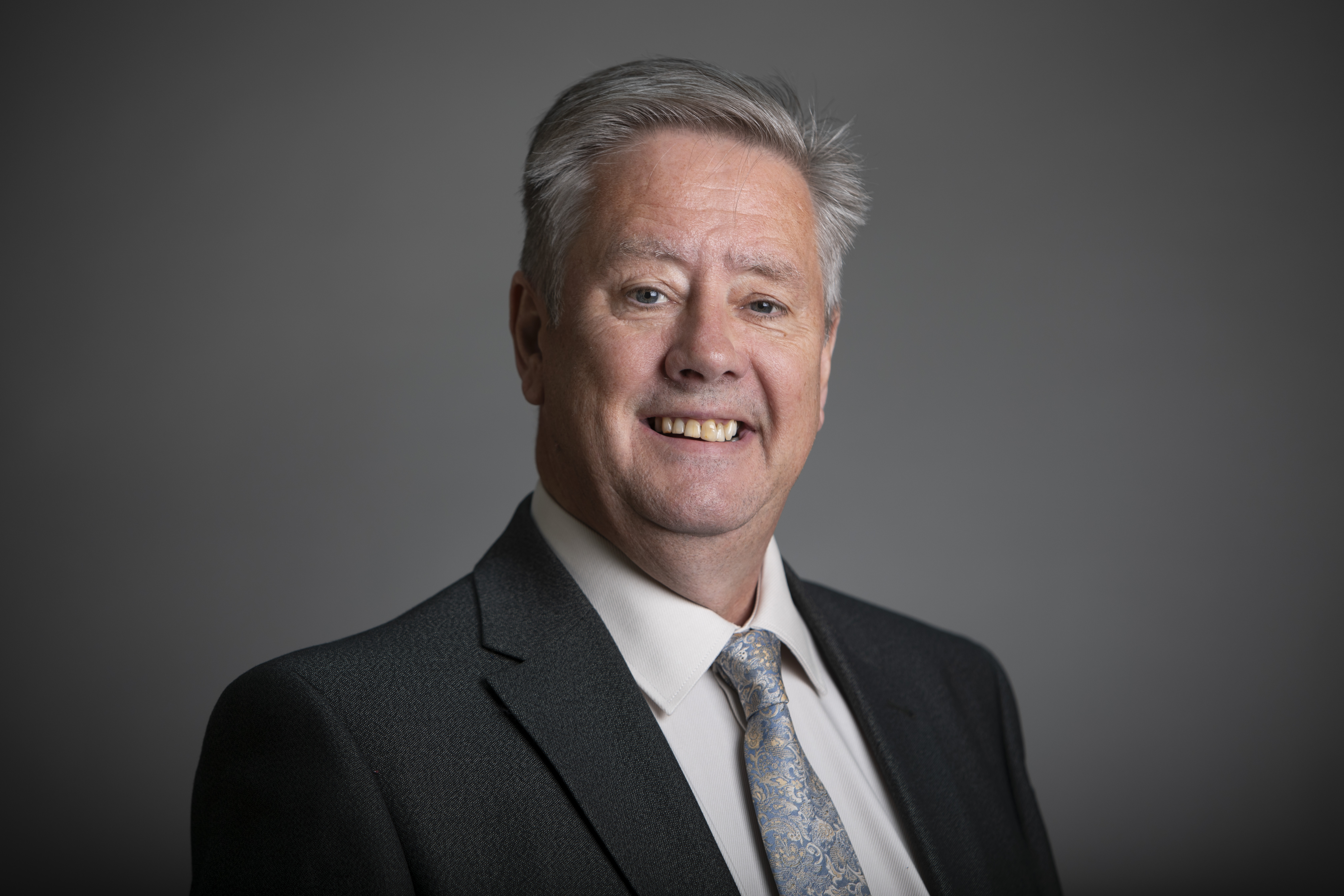
I am grateful for the opportunity to speak for the Liberal Democrats in today’s debate.
Last week, outside the Covid-19 inquiry in Edinburgh, a member of the Covid bereaved families held back tears as she said of the former First Minister, Nicola Sturgeon:
“I am absolutely ashamed and devastated to hear what she’s doing now. I can’t believe it”.
She was there representing just one of millions of Scots families who hung on the former First Minister’s every word during the daily lunchtime briefings. Those families shaped their worlds around the policies that were spelled out from that Bute house podium, and they saw their lives and the lives of their loved ones curtailed and, in some cases, even foreshortened by those same policies.
However, now, at the time of asking, when it matters most, the former First Minister’s words—words that defined the culture and calculation that underpinned the life-and-death decisions—have been rendered almost wholly irretrievable. It is now clear that a full narrative account of Scotland’s pandemic story will be forever denied to the families at the heart of this. What is worse is that it has been denied to them by an act of wilful concealment by Nicola Sturgeon and those around her.
The most difficult moment for Nicola Sturgeon during her testimony to the inquiry this morning came when, in cross-examination, Jamie Dawson KC asked her about assurances that she had given to Ciaran Jenkins of Channel 4 News that she would not only retain the salient points in her WhatsApp messages and other private messages but submit them wholesale, in their entirety, to the inquiry that she knew was sure to follow. She was forced to make it clear to the inquiry today that she never had any intention of fulfilling that assurance, because, at the time of making it, she was personally deleting every one of the messages.
Nicola Sturgeon apologised to the inquiry and then repeated, almost word for word, the same justification for the complete excision of the messages as was offered to the inquiry just yesterday by her deputy, John Swinney. She said that such messages were of little consequence and that, in any case, since 2007, SNP ministers had been strongly advised by the civil service to delete all private messages once key points had been transferred to the official Government record, so that, should a phone or other device be lost or stolen, sensitive correspondence would not be compromised.
It bears stating that that policy was not codified until November 2021, several months after the Scottish Government had issued a “Do not destroy” notice for such material. That is perhaps why neither Kate Forbes nor Jeane Freeman—ministers of some time served—knew nothing about such a policy.
However, here is where I get stuck. Members will recall that, along with Jackie Baillie, I served on the Committee on the Scottish Government Handling of Harassment Complaints—the Salmond inquiry. If, as we have heard, Nicola Sturgeon only ever used her personal phone, and if we are to believe that, since 2007, she routinely followed advice from civil servants by deleting all her private messages to avoid their being compromised in any way, how is it that she was able to furnish our inquiry with literally pages and pages of WhatsApp messages between her and Alex Salmond, sent in 2017, that were retrieved from her phone? Those messages were of a highly personal and sensitive nature. If her pandemic WhatsApp messages were of such little consequence, why did she delete that set and not the other?
All that the grieving families at the heart of this have to go on now are the remnants of a few pieced-together conversations. That is not what they were promised. Those messages matter because, in what little we have seen, we have caught a glimpse of the culture behind the decisions that we all had to live and, in some cases, die with and under.
Today, and at several other times during the inquiry, we have heard about an exchange between Humza Yousaf and Jason Leitch on 20 May 2021. Jason Leitch said:
“There was some first minister ‘keep it small shenanigans’ as always. She actually wants none of us.”
The former First Minister deftly tried to spin that as her just not wanting a cast of thousands at every meeting, but I think that it speaks to something more—in many ways, a government within a Government. The pandemic response was governed in large part by a shadowy central committee that we now know as “Gold Command”. I say “shadowy” because it was a central committee with no meeting diet and no minutes—a committee about which the then finance secretary, Kate Forbes, knew absolutely nothing for much of her first months in office. However, that committee formed, in large part, the wheelhouse of our pandemic response. It provided options and decisions for ratification by the Cabinet. Over the summer recess months, it was the only group to which the First Minister referred to sense check decisions. Ministers must, at times, have felt like window dressing.
It seems that decisions were taken by a very limited number of individuals, some of whom were not even elected. At that time, the Parliament had transferred an unprecedented level of power to Scottish ministers. I do not remember any section of the coronavirus acts ceding such control to such a committee but, sometimes, even that route was circumvented.
On 18 March 2020, like many other parents, I packed my 11-year-old boy off for what would be his last day in primary 7. From testimony that we received yesterday, it turns out that only John Swinney and Nicola Sturgeon took that decision and that they did so without reference to Cabinet discussion. There was no analysis of the impact on the poverty-related attainment gap.
 link