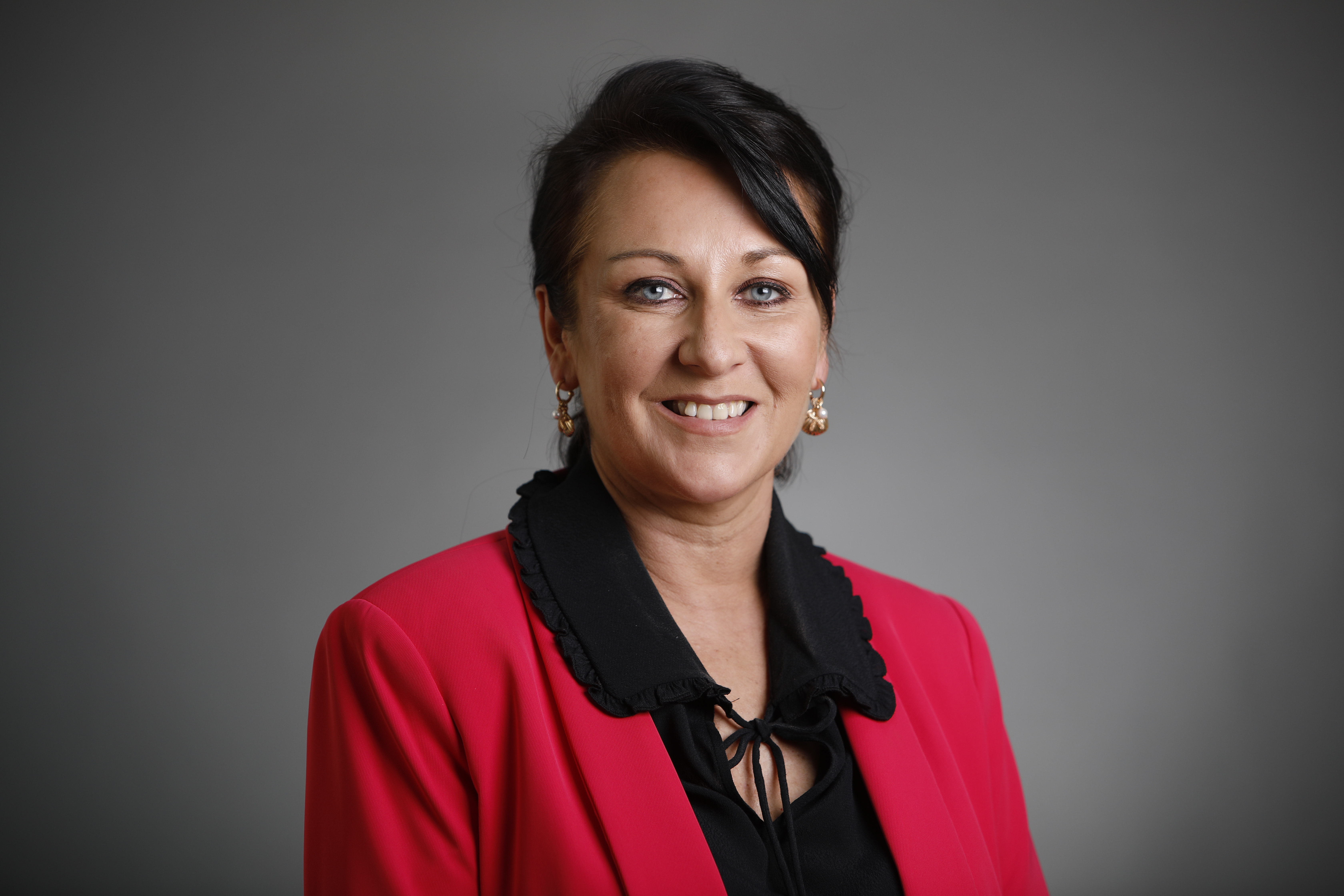
Jackie Baillie was doing so well until she got to the final line of her speech.
The annual budget debate is a highlight of the parliamentary calendar. Normally, it is when we get to hear all the parties’ big hitters deliver their great lines. In that respect, it is very disappointing that, as far as I have seen, none of the candidates for SNP leader—and First Minister of Scotland—has even appeared in the chamber, let alone contributed to the debate. We would have enjoyed hearing speeches from them all, setting out their vision for Scotland.
Never mind. We heard a barnstorming speech from my good friend Kenneth Gibson, who never disappoints the Parliament with his colour and energy. I say to Mr Gibson that it is not too late—he has until Friday to attract the necessary nominations. We would welcome him putting his hat in the ring.
There is something of a tradition around the budget process, which dates back to Derek Mackay’s time as finance secretary. At stage 1, the finance secretary comes to the chamber and says, “Every single penny has been allocated and not another penny can be found. If Opposition parties want to spend more money, they need to tell us exactly where in the budget they would take it from.” As Opposition parties, we say, “What are you hiding?”, and we are told, “There’s not a penny to be found.” Despite that, every single year, we get to stage 3 and—miraculously—more money appears. Members will remember the running joke about Derek Mackay’s well-stuffed sofa.
Mr Swinney has not disappointed us this year. He has come up with an extra £125 million in Barnett consequentials, thanks to the UK Government. He says that he has found that money to provide more money for teachers. We are still not clear what that means. Does that mean that a new offer is to be made to the teaching unions, or is it just money to back up the offer that was made last week, which has already been rejected by the EIS? It would be helpful if Mr Swinney could clarify that point when he responds to the debate.
The overall picture in relation to the budget is that we have a record block grant from Westminster in the current financial year. Despite the increase in inflation, the Fraser of Allander Institute has said that the budget for the coming year is more or less protected against inflation—that was before the extra money was found. We also have a Barnett formula that delivers more than £2,000 per head of population of additional spending here in Scotland compared with the UK average. That is extra money coming to Scotland, thanks to the union dividend. We should never forget that.
As many members have made clear, a budget is about choices. At stage 1, we set out our alternative approach; we would do things differently. The planned national care service, which it is estimated will cost £1.3 billion over the next five years, is something that we would scrap. I do not know where Emma Harper has been, but four committees of the Parliament have produced reports slamming the plan for a national care service and pointing out its weaknesses. Now, even a candidate to be First Minister—Ash Regan—is calling for a rethink. We have a growing consensus that includes all the Opposition parties and even a candidate for First Minister saying that the plan for a national care service does not add up. It is time for the plan to end so as to free up resources for elsewhere, such as local government.
There is a more fundamental point to be made about the size of the budget. Fiscal devolution means that the amount of money that the Scottish Government has to spend is directly tied to the performance of the Scottish tax base relative to that of the rest of the UK. We know that, since 2014, on average, the Scottish economy has grown at half the rate of that of the UK as a whole—I made that point to Mr Mason earlier. If we had at least matched UK growth, we would have had hundreds of millions of pounds more to spend on public services than we currently do. Tackling economic underperformance must be a priority for the Scottish Government.
I was very pleased to see another candidate for First Minister of Scotland—the current finance secretary, Kate Forbes—saying in the newspapers at the weekend that she is to put a
“rescue plan for the Scottish economy”
at the heart of her leadership campaign. The current finance secretary is saying that we need a rescue plan to save the economy from her own Government, which has been in power for the past 16 years—you could not make it up.
Despite today’s announcement on more money for teachers’ pay—on which we still need clarification—local government core funding is being cut in real terms. Several members from across the chamber told us what the real-terms impact of that will be as councils set their budgets in the coming days and weeks.
Sarah Boyack talked about the impact on the community that she represents. Miles Briggs talked about cuts to home to school transport and outdoor education. Stephen Kerr talked about the possibility of four swimming pools in Falkirk closing. Others talked about cuts to recycling centre hours. Pam Duncan-Glancy talked about cuts to the third sector in Glasgow and increasing charges. That message is coming from every council in Scotland. Even SNP council leaders are revolting at the prospect of what the Government will do to them in cutting their spending.
The stand-in finance secretary talked about the child payment. As Liz Smith said, we welcomed the child payment, but we have to look at what else the budget will deliver for those who are disadvantaged. If at the same time as there is a child payment, councils are cutting breakfast clubs for disadvantaged children, cutting free swimming lessons for young people, as a result of which they will be unable to learn to swim, closing libraries and closing arts programmes, that is no way to help the disadvantaged. In this budget, the Government is giving with one hand and taking away with the other.
Mr Swinney mentioned the social contract. He mentioned the fact that there are services that are available for free in Scotland that are not available elsewhere in the UK. That is true in so far as it goes, but the problem is that those free services are rationed. NHS dentistry is free in Scotland, but it is impossible to find an NHS dentist who will give you an appointment. I had a letter this morning from a constituent in Kirkcaldy making exactly that point to me and blaming it on Humza Yousaf—yet another candidate to be First Minister.
Higher education is free, but thanks to the SNP cap on numbers, many talented youngsters, as Liz Smith and Stephen Kerr said, simply cannot get a place at university. We have free parking at hospitals, but it is often impossible to get a space. We have free bus travel for young people, but bus services are being cut across the country, so there are no buses for them to travel on. That is not a record to be proud of.
This budget does nothing for the economy, is not the rescue plan that the finance secretary has called for and does not deliver the 75 per cent cut in rates for retail, hospitality and leisure businesses that applies south of the border—the same businesses that are reacting in horror to the introduction of the ruinous deposit return scheme, which is yet another calamity from the Government.
The budget delivers higher taxes and savage cuts to council funding. As councils meet in the next few days and weeks to slash services, close libraries, close swimming pools, cut leisure centres, cut breakfast clubs and cut funding to the third sector, it is clear that Mr Swinney and his Government have to take responsibility for all those cuts, which is why we cannot support the budget and will vote against it at decision time.