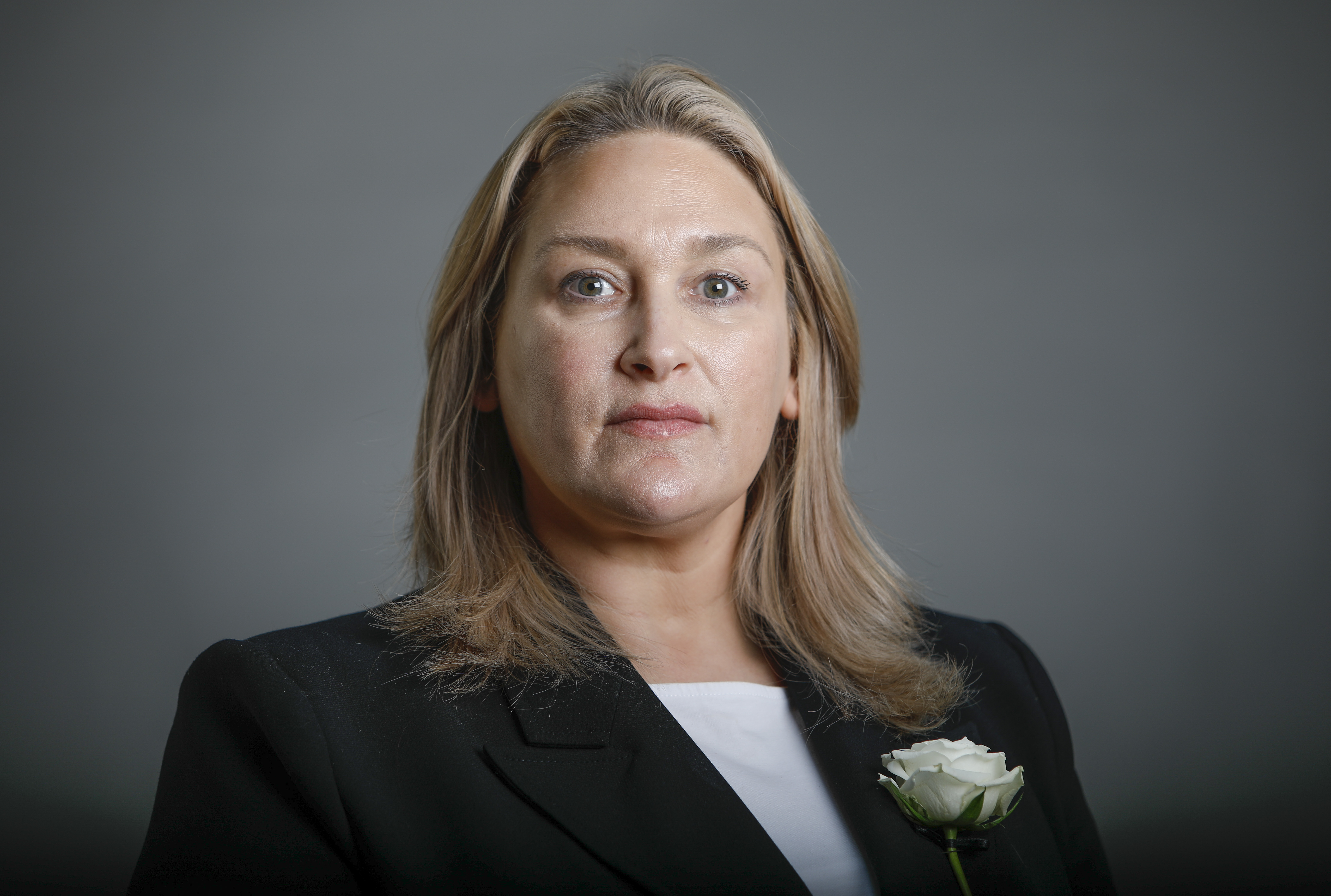
I am the chairperson of the Scotland Against Greyhound Exploitation registered charity, which the convener has just mentioned. My colleague and fellow trustee and founding member, Jacqueline Brown, will speak as well, if that is okay.
The convener has kindly already given a bit of a rundown of the petition that we are here to speak about, which is PE1758, on ending greyhound racing in Scotland. The petition was lodged in October 2019 and gathered 13,159 signatures. That made it the fifth most-signed Scottish parliamentary petition in history, which speaks to the level of support for this important proposal.
As the convener mentioned, the petition passed through the ECCLR Committee. Unfortunately, we then suffered some delays due to the Covid pandemic.
The petition’s last hearing was in February 2021, at the ECCLR Committee. That committee pledged to put its concerns about greyhound racing in writing to the Scottish Animal Welfare Commission. At the moment, the issue is not included in the SAWC’s work plan. I think that the intention of the letter was to invite the SAWC to consider bringing it into the work plan. We were very disappointed to learn in the past few weeks that the letter was never sent. We are a year on, and there has been no action so far, which is disappointing for us. Therefore, we welcome the opportunity to give evidence today and bring the issue back to the fore.
It is important that we take this opportunity to update the committee on the current landscape of greyhound racing in Scotland. There have been a great number of submissions on the petition, but members may not have had the opportunity to read them.
When we lodged our petition, in 2019, there were two tracks in Scotland. One was a licensed track in Shawfield in Glasgow, which was regulated by the Greyhound Board of Great Britain, and one was an unregulated track in Thornton, in Fife. Although the latter has a premises licence from Fife Council, it does not operate under any specific welfare regulations and it does not have a governing body.
When the pandemic triggered a lockdown in March 2020, both tracks closed and, despite the restrictions permitting greyhound racing to resume just a few months later, the Shawfield track has never reopened. Therefore, we are now left with one operating track in Scotland, which is the so-called “flapper track” in Thornton, in Fife. As I mentioned, that track is completely unregulated. That leaves the dogs that race in Thornton among the most vulnerable in the United Kingdom at the moment.
The lack of regulation means that no vet is present at any of the races, which means that there is no administration of first aid or pain relief to dogs that are injured. There is no vet present to euthanise a dog, should it suffer a catastrophic injury such as a broken spine or a broken neck. There is no qualified person to assess whether dogs are in a fit condition to race on the day.
No drug testing takes place at Thornton, which is greatly concerning for us, because we know that, when Shawfield was open—it is now closed—drug testing did occur, albeit in fewer than 2 per cent of races. From those drug tests, there were 13 positive cases in dogs in the period from 2018 to 2019 alone. Shockingly, five of those were for cocaine. If that is the evidence from a track that tested in only 2 per cent of races, we feel that the rate of doping will be much higher at Thornton, and it is going completely unchecked.
There are no kennel inspections at Thornton to assess the conditions in which dogs are kept. We are both involved in greyhound rescue, and we have reports from independent charities that greyhounds are often kept in garden sheds. There are no regulations relating to how they should be transported to and held at tracks. Part of the work that we do is protesting track side and raising awareness. We have seen at first hand dogs arriving in hot cars on summer days and being held in those hot cars until they race.
Fundamentally, we cannot ignore the inherent risks of greyhound racing itself. Those risks are present whether the track is regulated or unregulated, and they cannot be mitigated with welfare measures or cleverly named initiatives. It is a fact that making six dogs race at speeds in excess of 40mph counter-clockwise around an oval track results in a high rate of collisions and injuries, with the first bend being notorious for causing the most casualties. The track configuration puts a strain on the left foreleg and the right hind leg of the animal, which results in weakness of the limbs and leads to fractures. Greyhounds are also seen to suffer much more catastrophic injuries through collision with the boards on the outside of the track, collision with the rails on the inside and on the bends, and collisions with one another.
The GBGB has been forced to publish injury and death statistics for its UK tracks since 2017, and they make for really grim reading. In the period from 2017 to 2020, some 18,345 dogs were injured on UK tracks and more than 3,000 lost their lives. Earlier this year, the cross-party group on animal welfare wrote to the GBGB to ask for Scotland-specific figures. The Shawfield track in Glasgow closed in March 2020, so there are just three months of data for that year, but we learned for the first time that, in the period of three years and three months, some 197 dogs were injured at Shawfield and 15 dogs lost their lives. That is despite Shawfield operating only one race night per week for the majority of that period. Other GBGB race tracks race seven days a week.
We also know that 200 dogs died on GBGB tracks in 2020, despite the industry being closed for some time during the first lockdown. The percentage rate of track deaths is the same now as it was four years ago, despite some of the initiatives that the GBGB has put in place. That demonstrates that the risk can be eliminated only by banning the industry—no amount of welfare regulation will change the danger of the track itself.
We argue that, on the basis of that evidence, injuries and deaths are likely to be occurring at a similar—if not higher—rate at Thornton, but there is no requirement for the track to record or publish that information, so we are working blind and we will never know.
 link