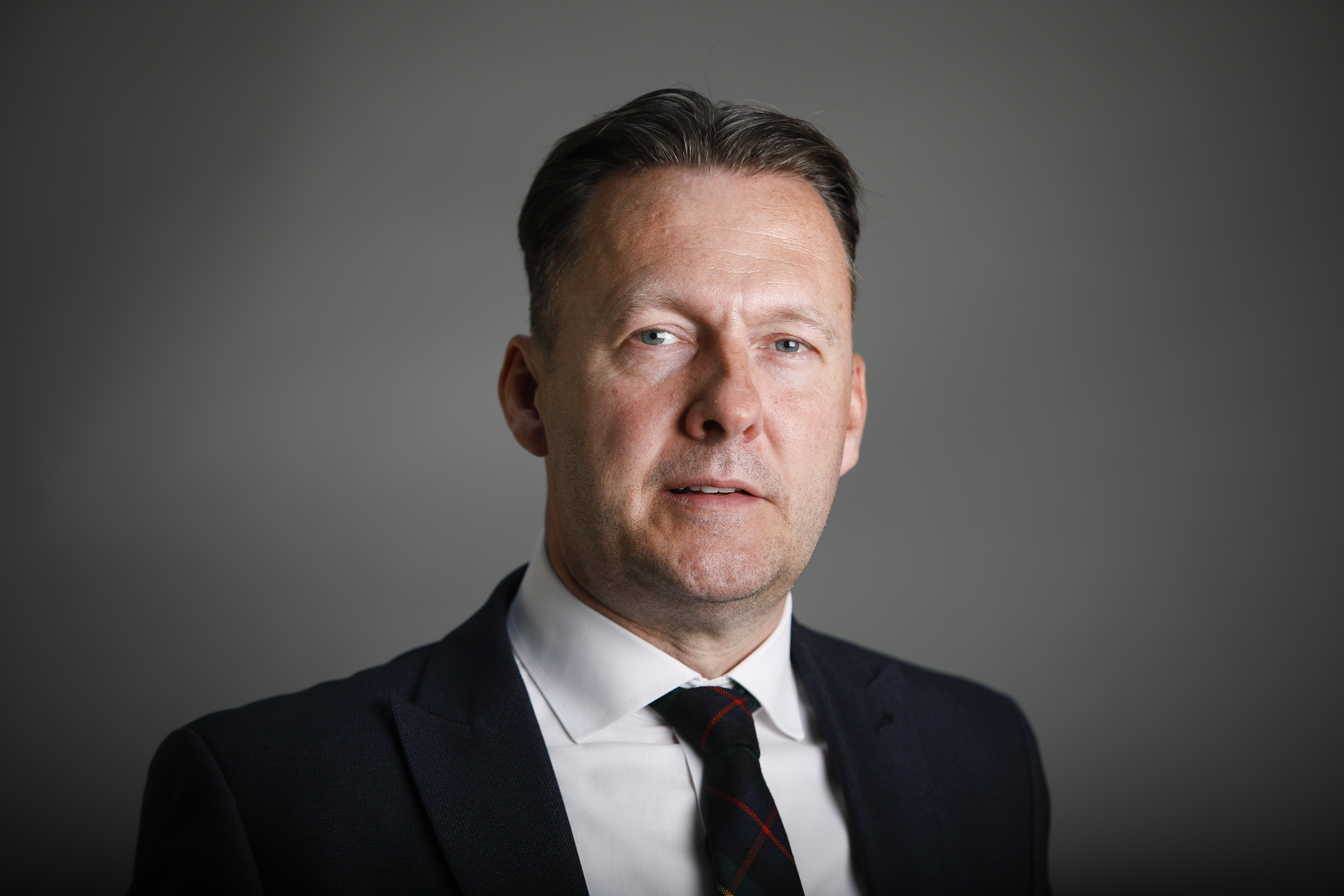
I thank the members who have given me a warm welcome back to the chamber. I am delighted to be responding to the debate. I thank Michelle Thomson for proposing the debate and for her incredibly strong and reflective speech. It will give us all pause for thought, and I am grateful for that.
We have covered a wide range of issues, reflecting the priority and seriousness that we all give to ending the inequality that women and girls still face in society, here and globally.
On the global picture, I want to pick up on some of the points that have been made. My heart and best wishes are with the women of Ukraine today. As Michelle Thomson said, war has a devastating and disproportionate impact on women and children. We have been watching some pretty horrific scenes on the news—women and children fleeing from their homes towards safety. It is such a desperate situation that our hearts go out to the people of Ukraine and to all the women and children who are fleeing the war.
Beatrice Wishart reminded us that we must think about such situations and the impact that they have on a woman’s decision to “fight or flee”. I would put that in quotation marks, because that is exactly the decision that they must make, and they usually have to make it in the time that it takes to snap their fingers. Women are not deciding whether to fight or flee only in Ukraine; they are doing so in Afghanistan and in other parts of the world.
Emma Harper and Beatrice Wishart mentioned UN resolution 1325. Since 2016, the Scottish Government has contributed to the international women, peace and security agenda, which was initiated through invitation by the UN special envoy to Syria. The First Minister committed to funding a pilot project to train 10 women from the Syrian women’s advisory board of the UN special envoy. After the pilot, the programme became known as the women in conflict 1325 fellowship programme and was delivered by Scottish human rights organisation Beyond Borders Scotland. It was assisted by UN experts and endorsed by the then UN special envoy to Syria.
When the women in conflict 1325 fellowship commitment came to an end in April 2021, the Scottish Government was presented with an opportunity to assess whether and how it would continue to fund activities in relation to the women’s peace and security agenda. I would be happy to speak to Emma Harper, Beatrice Wishart and any others who might like to give us some understanding of their ideas on how we can continue the work. I look forward to hearing from them.
I think that we can all agree that the intention behind this year’s theme—#BreakTheBias—is long overdue and is something that we are all working towards.
In response to members’ contributions, I want to agree with Pam Gosal that this is a celebration: it is a celebration of Russell Findlay’s great-aunties, a celebration of Pam Gosal herself becoming a leader in her household, and a celebration of all the women’s organisations that have been mentioned today. It is a celebration of all the women’s enterprise networks and other women’s organisations that Gillian Martin and Marie McNair highlighted.
I want to celebrate all the amazing women with whom I work every day—many are in the chamber. In fact, they are all in the chamber, but there are also the women whom I see in the work that I do in my constituency and as a minister. I want to celebrate their roles, too.
I also want to celebrate friends and family. Indeed, I could not have got through the past year of my life without my friends and my family. I celebrate the role models, the activists, the care givers and the business leaders. I celebrate the women who deal with and overcome the obstacles that life puts in front of them, and their families and who continue to keep their lives on track day in and day out, just quietly getting on with things and smashing it. Today, they are the women of Ukraine. I also celebrate the people whom Jenni Minto mentioned: Sheina Marshall, Bessie Williamson and Ray Michie. International women’s day is for all of you, so I thank you so much for all that you do.
The Government is tackling gender inequality at different levels by addressing the immediate and acute consequences, including the insidious violence and abuse that many women face and, likewise, the poverty, homelessness and ill health that blight the lives of too many women and girls. However, we must also continue to work towards the systemic change that we want and, ultimately, the end of gender discrimination. As Maggie Chapman reminded us, we need to do so for all women—minority ethnic women, disabled women, trans women and women of all ages, denominations, sexual orientations and backgrounds. If we make policy by taking an intersectional feminist approach that works for women in all their diversity, it will work for everyone.
As we all know, if we are to be successful at any level, it is vital that we have the evidence to ensure that we are taking the right action. That is because evidence tells us that we do the majority of the caring—paid and unpaid—and that, as a result, many of us work in the lowest-paid jobs, which are undervalued in society. That is where we need to break some of the bias. It runs alongside the gender-based violence and misogyny that we face throughout our lives.
That is why we continue to prioritise funding for violence against women services, and are providing more direct support than at any other time. Throughout the Covid pandemic, I and my officials have worked with Scottish Women’s Aid and Rape Crisis Scotland. Between 2020 and 2021 we allocated an additional £10.75 million to services in order to deal with increased demand. Indeed, we quickly realised at the beginning of the pandemic that women would be victims of it.
It is why we asked Baroness Helena Kennedy to consider whether Scotland should have a stand-alone offence to tackle misogyny. We await her findings, which I hope will come soon. It is also why the Forensic Medical Services (Victims of Sexual Offences) (Scotland) Act 2021 will be commenced on 1 April 2022. It will establish a legal framework for consistent access to self-referral so that a survivor can access healthcare and request a forensic examination without having to make a police report.
So many areas have been covered in today’s debate; however, looking at the clock, I think that I will finish now. On doing more than what we have talked about doing today, I have to say that, as minister, I am happy to work with anybody from across the chamber who has new, refreshed or different ideas. It would be too easy for us to lose the momentum that we have gathered; history will not judge us kindly if we do. I plan to celebrate international women’s day by celebrating all the women of this world, then I will roll up my sleeves for the work that we have ahead of us to break the bias.
I hope that you will all join me. [Applause.]