Parliament Workbench
Data: Official Report to 19 Nov 2026

Official Report · Committee

Smith Commission for Further Devolution of Powers to the Scottish Parliament

Thursday 4 December 2014 Devolution (Further Powers) Committee About 09:00–11:15 Committee business 281 contributions · 14 speakers

Speakers

Choose an MSP to read only their contributions

The record

281 contributions · showing 1–200
Bruce Crawford SNP The Convener · Stirling
link

I welcome the Rt Hon Alistair Carmichael, Secretary of State for Scotland, to our deliberations this morning. I also welcome Chris Platt, the secretary of state’s principal private secretary—I hope that I got that title right. Thank you, Alistair, for agreeing to appear in front of the committee so quickly after the Smith commission report came out. It is very helpful for us and will enable us to begin to get an understanding of the perspectives of both the United Kingdom Government and the Scottish Government.

We will ask some general questions at the beginning and will go through some of the tax and welfare issues. We will perhaps address constitutional matters towards the end. I will begin by bringing us back to an issue that we discussed with Lord Smith. Paragraph 21 of the Smith commission’s report seeks to entrench the constitutional position of the Scottish Parliament and Scottish Government as “permanent institutions”. Lord Smith said to us on Tuesday morning:

“If you know a way of making the institution permanent, tell me, because that is the Scottish people’s will.”—Official Report, Devolution (Further Powers) Committee, 2 December 2014; c 31.

I think that we all recognise the challenge here, but I wonder what measures you might be aware of that could be taken to entrench the concept of permanence and enhance the autonomy of the institutions of the Scottish Parliament and the Scottish Government beyond merely stating it in primary legislation. Has any consideration been given to alternative models that might exist in other jurisdictions?

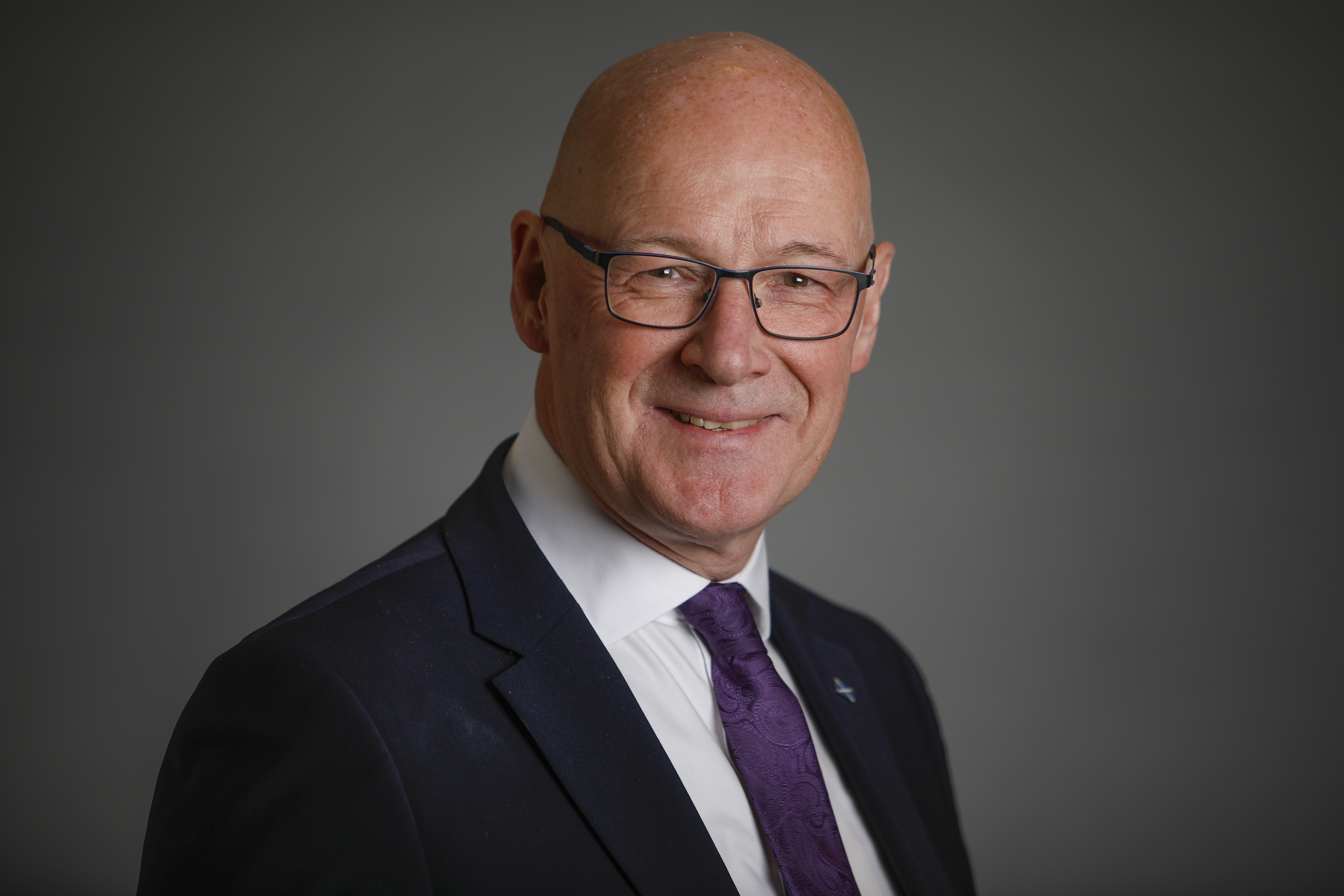
Rt Hon Alistair Carmichael Secretary of State for Scotland
link

Good morning, convener. Thank you for the invitation.

Bruce Crawford SNP The Convener · Stirling
link

I apologise, because I should have offered you the chance to make an opening statement. You can do that first if you wish.

Alistair Carmichael
link

No, I will waive doing that because I know that the committee is pressed for time this morning. I am sure that we can just cut to the chase, so to speak. However, I put on the record my appreciation for Lord Smith and the party representatives who assisted him—I see that we have a couple of them here this morning—and for the secretariat.

I am pleased to be here today at this stage because, as you said, it is early days since the report was received. We are working to a tight timetable but I recognise that committee members want to give the report proper scrutiny as parliamentarians, so we all need to make a special effort in that regard. I anticipate there being further occasions of this nature for me and other ministers in the future.

One of the things that I thought was very useful in the Smith report was Lord Smith’s observation about the opportunity that exists for better joint working between the Parliaments. We have always had different mechanisms for joint working between the Governments and occasionally there have been instances like this one, when I am here as a minister talking to you as parliamentarians. In the past, we have also had Scottish Government ministers in London for parliamentary committees there. However, Parliament-to-Parliament dialogue is something that we have never quite got right, and that is one of the opportunities open to us.

I think that the answer to your question about entrenchment is contained in the question itself. De facto, the permanence of the Scottish Parliament is guaranteed by the will of the Scottish people. That was the claim of right that was signed up to in the 1990s as part of the Scottish Constitutional Convention, and for all practical purposes it is unthinkable that we would not now have within the United Kingdom a Scottish Parliament.

However, I fully accept that, whatever the de facto position, the de jure position is a rather more challenging prospect. In the current United Kingdom constitution, we only really have the mechanism of primary legislation. If nothing else is clear at the moment, it is pretty clear that there is an emerging constitutional position not only in Scotland but across the whole United Kingdom. You will be aware that the Labour Party and my party are both committed to having a UK-wide constitutional convention, and that is exactly the sort of issue that it could deal with. Ultimately, we might be required to come to a position in which we have some sort of written constitution, for which I have always been an enthusiast.

In the meantime, I would ask whether you really want to get hooked up on the de jure position, given that the permanence of the UK’s position in the European Union was due to a piece of primary legislation, the European Communities Act 1972, which has maintained our position, and the position of the Communities and subsequently the Union.

I am open to thinking about different ways in which that permanence could be achieved. It would be healthy, as part of a wider constitutional reform, if we could entrench it in legislation but, as I said, the biggest guarantee is the will of the Scottish people.

Bruce Crawford SNP The Convener · Stirling
link

Lord Smith’s perspective on the issue is interesting. He has claimed that, if anything was to happen and the Parliament was not continued according to the will of the Scottish people,

“a plague of boils or something will break out.”—Official Report, Devolution (Further Powers) Committee, 2 December 2014; c 31.

Obviously, we do not want that to happen.

Alistair Carmichael
link

Well, indeed.

Bruce Crawford SNP The Convener · Stirling
link

I am glad that you said that you are open to suggestions, because a possibility has been suggested to me that I would like to explore. You might not be able to give us a lot of detail today, but the suggestion may be worth looking at.

In the post-colonial period, the autonomy acts that were passed for post-colonial areas contained a charter of autonomy. We are obviously not in a post-colonial situation—I understand that—but an autonomy act that had a charter of autonomy in it to reserve certain functions and powers to the institutions of the UK has been suggested to me as a potential avenue to enable us to entrench the Scottish Parliament powers. We may have to wait some time for the written constitution; we do not know for how long we would have to wait, and we might never get one. All I am asking is whether you are prepared to explore and have a look at that suggestion.

Alistair Carmichael
link

I would certainly be prepared to explore it. As Secretary of State for Scotland, I am constitutionally the guardian of the devolution settlement, so it is something that I can legitimately have a look at.

The immediate question that comes to mind is how we would entrench the charter, which appears to bring us back to primary legislation. The nature of sovereignty has exercised jurists for centuries. Many years ago, as an undergraduate, I had the great good fortune—perhaps—to have to study jurisprudence and the point at which sovereignty shifts and crystallises.

A charter might draw on the way in which the treaty of union was subsequently enacted in the acts of union. All those things can be looked at but, for the moment, my priority is working to the timetable for the implementation of the Smith agreement. If there is a way of achieving the higher-level stuff, I am in the market for looking at it.

Bruce Crawford SNP The Convener · Stirling
link

That is very helpful. If you can write to us at some stage to let us know what your response is, that would be most useful.

Alistair Carmichael
link

Certainly.

Lewis Macdonald Lab North East Scotland
link

Good morning, secretary of state. I am interested in following the convener’s line of questioning, because the Smith agreement is implicitly and explicitly about a stronger Scottish Parliament within the United Kingdom. As Secretary of State for Scotland in the UK Cabinet, what discussions have you had with colleagues about any implications that may arise from the agreement for devolved arrangements elsewhere in the UK and for the wider UK constitutional position?

Alistair Carmichael
link

In the Cabinet, the conversations surrounding the Smith commission report have been pretty brief, along the lines of, “We committed to implementing the conclusions of Lord Smith’s inquiries and deliberations; we now have those, and we will implement them.” I do not think that a great deal more conversation is necessary.

There are other aspects of the wider UK constitution that are very much in play. You will have heard the Prime Minister’s comments on the question of English votes for English laws, and you will know that the Cabinet now has a sub-committee that is looking at that question. It is chaired by the leader of the House of Commons, with the Chief Secretary to the Treasury as the vice-chair. The parties in the coalition have different views on that, and your own party, convener, has been invited to contribute to the discussion. We anticipate that a command paper setting out the different options in that respect will be published at some point before Christmas, and the discussions will proceed after that.

Ultimately, the issue is more to be determined at the next general election in May and possibly even thereafter.

Lewis Macdonald Lab North East Scotland
link

It was clear from the evidence that Lord Smith gave on Tuesday that the UK Government and the Scottish Government both played a significant role in the Smith commission, by providing expert advice and information. Although the headlines have been written, much of the detail remains to be worked through. What is your role in ensuring that the input continues, and that the dialogue continues at expert level and official level to ensure that the detail is worked through in the most effective way?

Alistair Carmichael
link

It is my job to deliver the draft clauses according to the timetable, which takes us to 25 January. That is my responsibility. It is my head that is on the block if we do not meet that target.

Obviously, it is important that we maintain the best and closest dialogue with the Scottish Government and its officials and ministers. Those discussions are already on-going, especially at an official level. I am meeting the First Minister this afternoon, and I anticipate that the detail will form a significant part of our discussions.

I announced last week that, to assist with the implementation and the business thereafter, including the scrutiny once we have the draft clauses, we will be setting up a stakeholder group to maintain the wider engagement that existed during the Smith commission’s deliberations as we move towards the formulation of the draft clauses.

Mark McDonald SNP Aberdeen Donside
link

Good morning, Mr Carmichael. Some of the powers that are outlined in the Smith commission report will require primary legislation. However, some will not, and could instead be transferred by section 30 orders or through other arrangements. One example would be votes at 16, which it is expected will be in place in time for the 2016 Scottish elections.

Also, the transfer of responsibility for air passenger duty would not necessarily require primary legislation. Does the UK Government have a view on whether there should be a disaggregation of recommendations, with some being fast tracked where that is possible? Such an approach could be regarded as a gesture of good faith and a down payment on future powers.

09:15

Alistair Carmichael
link

I think that the expectation at the moment is still that this will proceed as a package, given the range of issues with which we are dealing and the somewhat tight timeframe to which we are working.

Having said that, and given that you mentioned votes at 16—you might have seen that I was talking about that on Monday—I think that it is clear that, to meet the deadline for an extended franchise for the 2016 Scottish Parliament elections, action would have to be taken more quickly. I have tasked officials in the Scotland Office with coming up with proposals about how I could do that. That is one obvious exception to the general principle.

You are right to say that the transfer of powers on air passenger duty would not necessarily need primary legislation. However, once we are talking about the transfer of taxation powers, with the budgetary consequences that come with that, there is probably a greater interest in ensuring that you get the whole thing as a package rather than taking it in dribs and drabs.

Mark McDonald SNP Aberdeen Donside
link

The issue to do with votes at 16 could be resolved by taking a UK-wide approach, given that a UK election is coming up in six months’ time. When I talked to a modern studies class in my constituency, the students asked me, “Why, if we were trusted to vote on Scotland’s constitutional future, do we seem not to be trusted to vote on who should be Prime Minister?” Is there a UK Government view on votes at 16 on a pan-UK basis?

Alistair Carmichael
link

There is not. There is a range of views on that in the Government, and I think that my view is pretty similar to yours. I would like to see votes at 16 across the whole of the United Kingdom. The answer to your modern studies class, of course, is that change would require primary legislation, which could not happen in time for us to do the necessarily legwork to extend the register in advance of the general election in May. That is not going to happen, realistically.

Extending the franchise could be done in time for 2016 by taking the section 30 order route, for example, with the necessary renewal of the registration process. I am keen that that should happen. I cannot give a cast-iron guarantee this morning; as the convener said, we are still in the very early days of considering the Smith report. However, with good will and joint working—because section 30 requires the two Governments to work together—it should be achievable.

Mark McDonald SNP Aberdeen Donside
link

On the wider issue, is a timescale envisaged? We talked about draft clauses being published by 25 January, but when do you expect the powers to be on the statute books? When will they be at our disposal in this Parliament?

Alistair Carmichael
link

Are you talking about full implementation of a Smith bill?

Alistair Carmichael
link

Well, we will have a general election in May and the Queen’s speech, I imagine, before the end of May. If the work on the draft clauses is done and there has been pre-legislative scrutiny, probably by a committee or committees here and in the House of Commons, which to my mind makes a degree of sense, I would not see barriers to early introduction of the bill—indeed, I think that the expectation is that there would be early introduction of the bill.

As a constitutional bill, the bill would require to go through the House of Commons on the floor and would not be taken in committee. That will add a bit to the timescale that is given over to it. I would anticipate that you would have a bill that would be through both houses by the end of next year or maybe early 2016. It is always difficult to predict. The important thing about the passage of the bill—to go back to my recent past as one of my party’s business managers in the Commons—is that the fact that it has a mandate, having been through a general election and given the commitment from the three parties, means that it would be very difficult for any party in either house to resist it.

Bruce Crawford SNP The Convener · Stirling
link

I will come back to Mark McDonald later, but we must make some progress.

Tavish Scott LD Shetland Islands
link

Secretary of state, can you clarify the thinking on intergovernmental machinery, which was a major recommendation of the Smith agreement? Linda Fabiani and I spent many a happy hour deliberating on that.

Linda Fabiani SNP East Kilbride
link

I think it would be going over the top to say they were “happy” hours.

Tavish Scott LD Shetland Islands
link

Okay. Perhaps I should say that we discussed it.

I am interested in transparency. The convener’s point about Parliament-to-Parliament dialogue and your observations on that issue reflected on Parliament’s scrutiny of joint ministerial committees and so on. Frankly, there is none of that at the moment. I know that we are at an early stage, but has the UK Government given some thought to that process? I will ask John Swinney the same question.

Alistair Carmichael
link

That perhaps ties into Mark McDonald’s point about those powers that can be brought forward earlier. There is no need for primary legislation to improve the workings between the two Governments. We obviously need a bit of political good will—sometimes we get that and sometimes we do not—but I see no reason why we could not improve and strengthen joint Government working. That is one of the things that I will want to talk to Nicola Sturgeon about.

Tavish Scott’s point is on the money. This should not just be about stitch-ups between the Governments in London and Edinburgh. The role of Parliament in scrutinising the joint working will be fundamental. There is a job of work to be done by Parliament, be it here or in the House of Commons.

Tavish Scott LD Shetland Islands
link

Would you be open to ideas such as the publication of minutes and so on, subject to the agreement of both Governments? That is something that could be extended to Wales and Northern Ireland; it is not just about Scotland and London.

Alistair Carmichael
link

I would be open to that sort of suggestion with the caveat that experience teaches me that, when minutes are going to be published, they tend to be less revealing than they might otherwise be. If we are to be serious about this, we will need to find more robust and extensive mechanisms than that.

Tavish Scott LD Shetland Islands
link

Yes, but even if the Parliaments in London and Edinburgh were told when meetings were taking place, that would be a start.

Alistair Carmichael
link

That is the sort of thing that could easily be started.

Bruce Crawford SNP The Convener · Stirling
link

I will take another couple of questions on this area and then we will move on to discuss tax.

Rob Gibson SNP Caithness, Sutherland and Ross
link

Good morning, secretary of state. In the light of a strengthened Scottish devolution settlement within the United Kingdom, Lord Smith expressed the opinion that Scottish Parliament committees could be strengthened. Do you agree that the power to compel the attendance of witnesses that applies at Westminster should be extended to the Scottish Parliament’s committees?

Alistair Carmichael
link

In principle, yes. The reason why I hesitate slightly is that you are inviting me to comment on something that is essentially a matter for the Scottish Parliament. That is something that should come under the Scottish Parliament’s standing orders. Under the Smith commission proposals, that is the sort of thing over which the Scottish Parliament will have complete control. As a UK citizen who was born and bred in Scotland, I can see the merit in that suggestion, but it is for the Scottish Parliament to decide its own procedures.

Rob Gibson SNP Caithness, Sutherland and Ross
link

Well, that matter was not decided by us. It was decided for us, primarily.

David Cameron has offered to meet MSPs in a formal setting at Holyrood. Should other UK ministers appear before Scottish Parliament committees, if requested?

Alistair Carmichael
link

That is always something for individual ministers to make a decision on. I have always attended when I have been asked. I would expect to do so, and if I am not available, I have a junior minister who attends in my place. However, it is for ministers to decide that for themselves.

Drew Smith Lab Glasgow
link

Good morning, secretary of state. On Tuesday, I asked Lord Smith of Kelvin about the public’s understanding of the devolution settlement and the extent to which the public having a good understanding of the settlement is one of the criteria by which we will have a successful implementation. He said that he was surprised by the lack of public understanding of who does what in Scotland at present. How do you see the UK Government being involved in taking forward a solution to that concern?

Alistair Carmichael
link

Lord Smith may have been surprised, but that might reflect the fact that he is a businessman and not a politician. I am afraid that those of us who have spent time on the doorsteps over the years have become rather wearily resigned to that lack of knowledge.

I do not think that we will ever reach an ideal solution. Most people have better things to do in their lives than to become intimately acquainted with the constitutional niceties of government. Having said that, there is an opportunity for all of us, as politicians, to stick more or less to the area where we have legislative or constitutional competence. In our constituencies, Tavish Scott and I generally arrange things so that he speaks on devolved matters and I speak on reserved matters. It is not exclusive and occasionally we stray. However, in general, it helps if MPs talk about reserved matters and MSPs talk about devolved matters.

There might be some scope for a public information campaign, especially once we reach the implementation of the new settlement and the Smith proposals.

Drew Smith Lab Glasgow
link

I would like to press you on that a little further. I accept the point. I think it is a frustration that we all understand locally, and the issue was certainly discussed a lot in referendum debates, where there was often confusion about whether we were talking about a transfer of power or about how the power is being exercised at the moment.

There may be a need for something more than just a public information campaign at some stage. Politicians have come to accept the problem, and I understand that the public will not necessarily be interested in the detail, but there is a responsibility for both Governments to be clear about what they do.

On Tuesday, Lord Smith said that there had been a tendency—I think that he was referring to successive UK Governments—to devolve a power to Scotland and then step back and ignore it. I suppose my question is about how active the Scotland Office is on such issues.

Alistair Carmichael
link

I now see where you wanted to take the question. A lot more can be done by the Scotland Office as the voice and face of the United Kingdom Government in Scotland.

In many ways, after the Scottish Parliament was set up in 1999, the UK Government kind of left the field in Scotland. We did not do enough to remind people here of the continuing, substantial responsibilities that we have as a Government, and more requires to be done in that regard. One thing that the referendum campaign brought about was a beefing up of the Scotland Office operation in terms of stakeholder engagement—I use that term loosely. That involved better engagement not just from the Scotland Office but from UK Government departments across the field.

At the Scottish business board a few weeks ago, one of the members said to me that it had been great for the past couple of years, with people such as the permanent secretary to the Department for Transport coming up to talk to and engage with people directly, and he asked me to promise that that sort of engagement will continue. I could give him that promise, because I am determined that it will.

There is no denying the fact that we—I mean the UK Government in a previous guise—somewhat took our eye off the ball. There is no point getting excited about that now, but we will do it differently in the future.

09:30

Bruce Crawford SNP The Convener · Stirling
link

We have had a good crack at general issues and we have gone into the constitutional stuff a bit earlier than I had expected. However, that is where we are. We have about 40 minutes left to get into the issues of tax and welfare. I hand over to Lewis Macdonald, and other members who want to get involved and ask about tax issues should let me know.

Lewis Macdonald Lab North East Scotland
link

I am interested in the secretary of state’s view on the practicalities of the tax devolution proposals that have been agreed by Smith and how they will be taken forward. How do you envisage the process being managed in a practical sense, in terms of the transfer of responsibility and the consequences that it might have across the responsibilities for raising tax revenue?

Alistair Carmichael
link

In practical terms, we can talk about the transfer and about what happens thereafter. As you will know, the Smith report proposes that, after the transfer, HM Revenue and Customs will continue to operate as the tax-collecting body for the Scottish and UK Governments in Scotland. That is a sensible and workable arrangement and the best practical one.

The Treasury is leading on the actual business of tax devolution, self-evidently. It will require a degree of close working, but the lines of communication are already open and there has been close communication and joint working since the Scotland Act 2012 in relation to the Scottish rate of income tax, which will come into force in 2016.

Lewis Macdonald Lab North East Scotland
link

Do you think that the continuing collection of income tax on a UK-wide basis is, in itself, a protection against the risk of damaging tax competition or people disguising their domicile or their place of work in order to benefit from a lower rate of tax?

Alistair Carmichael
link

The basis on which the tax collection will be done is residence rather than domicile. Forgive me for being a picky lawyer for a second. Old habits die hard, but it is an important point.

I hope that the use of HMRC will eliminate any opportunity for tax avoidance by stipulating one’s residence as being in one place or another. We cannot discount the possibility that there will always be people who want to play the system in that regard, but the continuation of HMRC as the single UK-wide collecting body is the best guard that there can be for the overall integrity of the system.

Bruce Crawford SNP The Convener · Stirling
link

The next question is from Mark McDonald.

Mark McDonald SNP Aberdeen Donside
link

My question is on VAT, convener, so you might want to let those who have questions about income tax go first.

Bruce Crawford SNP The Convener · Stirling
link

Does anybody else want to go into income tax?

Rob Gibson SNP Caithness, Sutherland and Ross
link

The devolution of income tax does not devolve the personal allowance. Why is that?

Alistair Carmichael
link

It is because income tax continues to be a shared tax. You would have to ask the Smith commission why it reached the decision that it did. I can see good reasons for it. Post devolution, it will be open to the Scottish Government, if it so chooses, to use the creation of a zero-rate band to vary the personal allowance upwards, in effect. The only end that would be achieved by devolving the setting of the personal allowance would be to allow the Scottish Government to cut the personal allowance to, in effect, increase taxes.

Rob Gibson SNP Caithness, Sutherland and Ross
link

The Scottish Government could set a zero rate in the top personal allowance if it wanted to, so why not just transfer the personal allowance?

Alistair Carmichael
link

I am sorry, Mr Gibson, but I did not quite catch that.

Rob Gibson SNP Caithness, Sutherland and Ross
link

If we will be able to set a zero rate above the personal allowance, why not just transfer the personal allowance?

Alistair Carmichael
link

As I said, income tax remains a shared tax. That is one aspect of tax that the Smith commission decided—and all parties agreed—should be reserved. There are others. For example, the taxation of savings and dividends income is also to remain reserved. Unless you want to cut the personal tax allowance, which may be what you have in mind—

Rob Gibson SNP Caithness, Sutherland and Ross
link

No, that is not what I have in mind. The personal allowance interacts with the welfare system, does it not?

Alistair Carmichael
link

It does up to a point.

Rob Gibson SNP Caithness, Sutherland and Ross
link

What would happen to people’s universal credit or benefit entitlement if the Scottish Government set a zero rate that was higher than the UK’s, meaning that people got to keep more of their income? Would the UK reduce universal credit or working tax credits?

Alistair Carmichael
link

That is the sort of detail that still has to be ironed out between the two Governments. It is pretty clear from Smith that there is a lot of that sort of work to be done.

Rob Gibson SNP Caithness, Sutherland and Ross
link

Okay—we look forward to it being done. Which Government would get the benefits of that saving? Would the money be transferred to the Scottish Government?

Alistair Carmichael
link

Same answer.

Mark McDonald SNP Aberdeen Donside
link

Control of VAT will remain at UK level, but there will be an assignment of revenue to Scotland of the first 10p, which at the moment is 50 per cent of the revenues, but who knows what the future holds? If the UK Government decided to lower VAT in a specific sector below the 10p threshold, which has been done in other areas, what would be the consequential impact on the Scottish Government’s budget? Given that there would be an impact, would there be advance negotiation, or would the Scottish Government just find out about it when the chancellor announced it in the budget?

Alistair Carmichael
link

That is a good example of the sort of joint working arrangements that we are going to have. Your point illustrates the necessity of having a more robust and effective mechanism for regulating the business between the two Governments. Hitherto, we have managed to get through with what we have had, because the areas of overlap have been less pronounced than they are going to be. In my view, that situation would clearly require consultation between the two Governments.

Mark McDonald SNP Aberdeen Donside
link

Would that consultation work in more ways than just the UK Government saying to the Scottish Government that it proposed to do something on VAT? Would it be open to the Scottish Government to make suggestions to the UK Government on approaches on VAT?

Alistair Carmichael
link

Yes. That is the whole point of it being a shared tax.

Bruce Crawford SNP The Convener · Stirling
link

I have a question about that. In evidence to the committee on Tuesday, the head of the Smith commission secretariat, Jenny Bates, stated that, if VAT revenues increased due to increased economic activity, the Scottish Government would keep those increased revenues, and vice versa. When she gave me that answer, I was slightly surprised, because we are talking about assigned budgets. Is that your understanding, too?

Alistair Carmichael
link

Sorry, but are you asking whether, if you have more VAT coming in from VAT payers in Scotland, you will get half of that?

Alistair Carmichael
link

Yes, that is my understanding.

Stuart McMillan SNP West Scotland
link

Page 9 of the Smith commission report sets out seven principles. I believe that principles 4, 5 and 6 are extremely important, particularly in relation to taxation. Notwithstanding those principles, what are your thoughts on the Smith commission recommendation to keep corporation tax reserved when, only yesterday, the chancellor announced that corporation tax is to be devolved to Northern Ireland?

Alistair Carmichael
link

Obviously, that is subject to the important provisos that progress will be made on the Northern Ireland budget being set and that there are implications for the peace process. I think that you heard Lord Smith say that he does not think that devolving corporation tax would be of benefit to Scotland. Certainly, the submissions that Smith received from business organisations and trade unions were in line with that view. If corporation tax is devolved to Northern Ireland—I stress “if”—that will be a recognition of the fact that Northern Ireland stands in a very different position from the rest of the United Kingdom, for reasons that are historical and largely not very happy. If that happens, it will be a recognition of Northern Ireland’s recent troubled past.

Stuart McMillan SNP West Scotland
link

I accept that, because of the past, the situation in Northern Ireland is somewhat different from the situation here. However, in your submission to the Smith commission you recommended that corporation tax

“should ... be operated and collected at the UK level”.

What is going to happen in Northern Ireland contradicts your recommendation to the Smith commission for the situation in Scotland.

Alistair Carmichael
link

Are you talking about the Campbell commission report?

Stuart McMillan SNP West Scotland
link

No, the Liberal Democrat submission to the Smith commission.

Alistair Carmichael
link

I do not know what I can add. There are particular circumstances in Northern Ireland, given that it has a land border with the Republic of Ireland and a very particular set of economic circumstances arising from its troubled past. If the judgment of the Governments is that devolving corporation tax will be a necessary part of stabilising the constitutional settlement, I do not think that many people in Scotland will want to interfere with that.

Bruce Crawford SNP The Convener · Stirling
link

I wonder how relevant the point about the land border is, given that a great many firms in Scotland export to and import from the Republic of Ireland across a very narrow strip of water.

Alistair Carmichael
link

It is relevant, in as much as it has a much greater impact on business and commercial activity in Northern Ireland—it is a very different impact from the impact that it has on trade with England, Scotland and Wales.

Tavish Scott LD Shetland Islands
link

Let us turn to paragraph 32 onward of the Smith agreement, on the Crown Estate. I know that it is early—we are only a week into the agreement—but how does the UK Government plan to give effect to those paragraphs? We might have a particular interest in paragraph 33 with regard to the islands.

Alistair Carmichael
link

The committee will know my views on reform of the Crown Estate. Since I became the secretary of state, I have referred to the matter on a number of occasions as being unfinished business. That part of the Smith agreement allows us to go ahead and finish that business.

I was particularly interested in onward devolution to the island groups. The islands councils have been pursuing that as part of the our islands, our future campaign. There is a real opportunity for the island communities to move on. Paragraph 33 refers to

“areas such as Orkney, Shetland”

and the Western Isles; I construe that as meaning areas that have island or coastal communities.

This is another matter that could profitably be discussed between the two Governments, but I would also want to talk to the local authorities themselves. Going back to Mark McDonald’s point about early engagement and what we can do early, we can start looking at how we would effect the transfer to the island communities now. I have a framework for engagement with the islands councils and a working group that is due next to meet in January, to which I want to talk about the issue. I am open to discussions between us, the Scottish Government and the local authorities even at this stage. If there is a neater way of getting the transfer of power direct from Westminster to the coastal and island communities of Scotland that want it, I see no reason why we would not do that if all three parties agreed to it.

Tavish Scott LD Shetland Islands
link

Paragraph 34 talks about the other main requirement, which is a memorandum of understanding between the UK and Scottish Governments in respect of the wider interests. The oil and gas industry is particularly exercised by that. Do you see that coming through as part of the overall package that you talked about earlier, or do you think that that paragraph could be given effect much more quickly through work between the Governments?

09:45

Alistair Carmichael
link

I see the memorandum of understanding as an essential prerequisite. Again, that highlights the way in which Smith offers us the opportunity to strengthen the workings of Scotland’s two Governments at the Scottish and United Kingdom levels, because it will create a greater imperative for a genuine joint working relationship.

Bruce Crawford SNP The Convener · Stirling
link

Rob Gibson can ask a brief supplementary question, if he wants to.

Rob Gibson SNP Caithness, Sutherland and Ross
link

I am curious to know whether the local authorities would share the Crown Estate’s sea bed out to the 200-mile limit as well as urban assets and so on, and whether the coastal communities and the island authorities would benefit.

Alistair Carmichael
link

I believe that Crown Estate ownership of the sea bed goes out to 12 miles. I do not think that it goes out to the 200-mile limit.

Alison Johnstone Green Lothian
link

The devolution of the Crown Estate’s economic assets to local communities is warmly welcomed—the subject has been discussed far and wide. Should there be the beginning of a process for local communities to be empowered more generally? For example, I do not believe that Angela Merkel could freeze council tax in Germany in the way that the Scottish Government is able to impose that on local authorities here. Has there been such a fixation on the powers that are devolved to the Scottish Parliament that opportunities have perhaps been missed to genuinely devolve greater powers to local authorities?

Alistair Carmichael
link

I think that that is the case, sadly. That is certainly my experience from living and working in Orkney and representing Orkney and Shetland.

Lord Smith has referred to that issue and how it came out in a whole range of the representations that he received when he was taking evidence. Sometimes it is in the nature of Government to centralise control, so a determined political effort is required to ensure that a localism agenda is driven through. I am completely committed to that agenda, which is why I was delighted that the UK Government, the Scottish Government, Glasgow City Council and other west coast local authorities were able to agree the city deal for Glasgow, for example. City deals have been a good mechanism in other parts of the United Kingdom for promoting the localism agenda.

This comes down to a pretty fundamental point: we can sit and talk about the location of power, the structures of Government and all the rest of it, but ultimately what matters and what will be felt in our communities and by the people whom we represent is how those powers are used, not who uses them.

Bruce Crawford SNP The Convener · Stirling
link

I have to move us on to welfare.

I was concerned about the interplay between reserved benefits, the benefits that will come to Scotland through the extended devolution package and the universal credit, so I asked the Scottish Parliament information centre to look at the matter. I have circulated the paper that I got back from it.

Alistair Carmichael
link

I do not think that I have seen that paper. I am sorry.

Bruce Crawford SNP The Convener · Stirling
link

I apologise if you have not seen it, but I can tell you roughly what it says. It states that, if the Scottish Parliament were to top up reserved benefits, a recipient of universal credit would receive a corresponding reduction in the universal credit payment. That surprised me. Perhaps the question is too technical at this stage, but it needs to be explored because, by extension, the same would probably apply to devolved powers.

Alistair Carmichael
link

It would be helpful if you could let me have that briefing, as I have not seen it. I struggle to think of anything in the Smith report off the top of my head that would justify an assertion of that sort, and I cannot think of any first principle that would apply and would mean that. If you let me have that briefing, I will make the necessary inquiry with colleagues in Whitehall and write to you.

Bruce Crawford SNP The Convener · Stirling
link

Thank you. I ask because paragraph 55 of the Smith commission report states:

“Any new benefits or discretionary payments introduced by the Scottish Parliament must provide additional income for a recipient and not result in an automatic offsetting”.

It does not mention the top-up process or devolved powers. We need a bit of clarity in that area. Otherwise, what would be the point of having the powers? That is quite a fundamental point.

Alistair Carmichael
link

Exactly, but without hearing the reasoning behind that conclusion, I cannot offer any explanation for it. It does not make sense to me. It may be that our old friend the law of unintended consequences is at play here. If that is the case, it is all the more reason to ensure that we have proper scrutiny of the draft clauses when they are brought forward.

Linda Fabiani SNP East Kilbride
link

Good morning, secretary of state. First, I would like to have a wee dig at something that you said earlier and clarify it for the record.

You said that all parties agreed on the personal allowance, thereby giving the impression that that was the starting point for everyone. I put on record that a recommendation being in the Smith report does not mean that everyone agreed with the proposition itself or that it was in fact the best solution. We had discussions and reached compromises, and we agreed on what could be included in the report. That is a very different thing.

I come now to the substance of my question. No doubt Tavish Scott will correct me if I am wrong, but one thing on which everyone agreed—

Linda Fabiani SNP East Kilbride
link

Everyone—including civic Scotland, in the submissions—agreed that the work programme was not working particularly well for Scotland. It was felt that there was quite a bit of confusion, and that, if we had control over the work programme to meet our specific circumstances, we could use it much more effectively.

I was quite disheartened to hear that the UK Government had signed extensions for the current work programme contracts. Can you outline for us what that actually means for the transfer of powers in relation to the work programme? How will the programme come over to us? Will Scotland have to stick with the UK Government’s methodology and simply administer the programme? If so, for how long will that be the case?

Alistair Carmichael
link

I have seen some of the coverage of the issue, and last night I saw the letter from the Secretary of State for Work and Pensions to Roseanna Cunningham.

First, it is important to put front and centre the fact that the decision that you mention was taken in August, so some of the breathless commentary about it being a dreadful decision that was designed to thwart the will of the Smith commission is not justified. The decision was taken long before the Smith commission was even set up.

I come back to the point that arose when we discussed the procedures that will follow. You will have a bill that, as I said, will clear the House of Commons and the House of Lords by late 2015 or early 2016—constitutionally, that process will need to be finished by March at the latest. That takes you to the spring of 2016. In practical terms, what would be achieved in terms of new systems and designs and the point at which the contracts could be dissolved, administratively as well as legislatively, remains to be seen.

Although the contracts have been extended from 2016 to 2017, that is another area about which the two Governments should be sitting down and talking. The Scottish Government should be saying to the UK Government, “We have done some thinking on the matter, and this is what we want to do with our new welfare system. How can that be represented given the contractual arrangements that you are putting in place?” With the political will, there is no reason why that cannot be done.

Linda Fabiani SNP East Kilbride
link

So you are saying that what you have signed up to takes it up to 2017.

Alistair Carmichael
link

Yes, that takes it to 2017.

Alistair Carmichael
link

As I understand it, yes.

Linda Fabiani SNP East Kilbride
link

I have a question that is slightly related to that issue. One point that has not been raised so far involves the part of the commission report on additional policy matters for which firm recommendations were not put in. I am thinking of student visas, welfare issues such as trafficking and asylum, and other matters such as red meat and fisheries levies.

Do you have a view on whether those additional policy matters will be considered seriously in the same timescale as the package that you mentioned, or are there issues in there that could be dealt with very quickly, given that many of them would not require legislation?

Alistair Carmichael
link

That is an interesting part that comes right at the end of the report.

Lord Smith was given a remit, and he set his own principles, to which we have referred already. He has come up with something that reflects a need for further devolution in those areas in which that makes sense because there is a distinctive Scottish need.

I look at the list of additional policy areas, and I think that some of them look like areas in which people just might not like the policy of the current UK Government, rather than areas in which there is a distinctive Scottish need.

On the other hand, with regard to the ability to lodge from within Scotland an asylum claim with the Home Office, I do not see any reason why, with a bit of political good will and attention, that sort of thing could not be accommodated. That is administrative, so you do not need to pass a law on it—never mind people having to traipse down to Croydon.

Linda Fabiani SNP East Kilbride
link

We have discussed student visas very seriously, and there is a very distinctive Scottish element in that regard. I do not think that anyone would complain if you were to say today, as a matter of good will, that you will take that issue very seriously and look at it.

Alistair Carmichael
link

I will certainly take it seriously. I know what the issues are—I have talked to the universities. It is a concern across the whole United Kingdom; it is not exclusive to Scotland.

Bruce Crawford SNP The Convener · Stirling
link

Drew Smith, Tavish Scott and Alex Johnstone have three quick supplementary questions. I am told that they are quick, and they will need to be because I want to get on to the last bit.

Alistair Carmichael
link

I will try to be quick in my answers.

Drew Smith Lab Glasgow
link

I had hoped to raise the points that Linda Fabiani raised. I am grateful to her for raising them and allowing us the chance to discuss the issues that Lord Smith has put at the end of his report, which are important and need some resolution. We need some reassurance that, although they are outside the formal agreement, they will not simply be put back on the shelf.

You talked about areas in which there is a difference in Scotland. With regard to health and safety, I have to say that there is an anomaly in Scotland. There is an interaction between health and safety legislation and the prosecution services and the promotion of health in the workplace through other devolved areas. There are big issues in that regard, and I wonder whether you could undertake to discuss them further with the stakeholders that are concerned about them. I am thinking in particular of the Scottish Trades Union Congress, but business would also want to be involved in those discussions.

My concern is that the barrier to progress in that area is that the expertise that we have at present comes from the Health and Safety Executive, which clearly has an interest in continuing the status quo. There needs to be a wider discussion around some of those issues and, as Linda Fabiani said, they should not be put on the back burner.

Alistair Carmichael
link

On your point about the HSE and the existence of a different prosecution regime, I know from my professional background, having both prosecuted and defended HSE cases over many years, that there was always concern about a lack of understanding across the whole of the HSE that different considerations applied due to the different criminal justice system in Scotland and that the role of the procurators fiscal was very different in bringing prosecutions forward. Having said that, the system worked more often than not—in fact, it nearly always worked and prosecutions rarely failed because of those minor tensions. I still think that, notwithstanding the interaction between inspection and prosecution, there is an obvious UK interest in having a uniform system of inspection and regulation across the country.

On all those issues, there is work to be done between the two Governments and the two Parliaments. If distinctive arrangements are to be made, we will make them by building consensus.

10:00

Bruce Crawford SNP The Convener · Stirling
link

Tavish Scott is next. We are not getting through the questions as quick as we need to if we are to get through everybody’s questions.

Tavish Scott LD Shetland Islands
link

I agree with Linda Fabiani’s first point about the work programme. If I understood your answer to her correctly, secretary of state, you said that, subject to the Governments working together, there is a way to get things to happen more quickly and that we do not need to wait until 2017. Linda Fabiani asked a fair question, which I agree with. If the Scottish Government can come up with a programme of employability, that can happen more quickly—is that what you are saying?

Alistair Carmichael
link

That is where the conversation needs to be had.

Alex Johnstone Con North East Scotland
link

Let us return to the subject of welfare. I have arrived at this committee this morning after spending three years on the Welfare Reform Committee, and I have already seen a process of divergence in relation to welfare in Scotland. The proposals from the Smith commission open that up significantly.

There has been a determination to cling to the Barnett formula—it is almost a white-knuckle death grip in some cases.

Alistair Carmichael
link

I am still clinging on.

Alex Johnstone Con North East Scotland
link

As we move towards the proposals that are contained in the Smith commission’s report, particularly those that relate to working-age benefits, there is already a significant divergence in policy. South of the border, there is a policy of reducing dependency and demand in order to limit cost, whereas in Scotland there is a priority to do something different, which is rather the opposite. As we move forward with that priority, are we not heading towards a Barnett formula elephant trap whereby the amount of money that is allocated in UK budgets for working-age benefits will fall away while Scotland might pile on demand and find itself underfunded?

Alistair Carmichael
link

The beauty of devolution is that you make your spending decisions, and you will now have to account for them in your funding decisions, too. You can spend the money only once. If we have learned nothing else in the past 10 years, we must surely have learned that.

Stuart McMillan SNP West Scotland
link

I have a question about the disability living allowance and personal independence payments.

Before I ask that question, I have another question. Regarding the work programme, was Lord Smith made aware of the extension when he was going through the process?

Alistair Carmichael
link

I do not know.

Stuart McMillan SNP West Scotland
link

Thank you.

I return to my original question and refer to paragraph 49 of the Smith commission’s report. The DLA and PIP are to be devolved but, given the delay in the transition from the DLA to PIP, it is reasonable to request a halt to the roll-out so that no difficulties are created for Scotland. Do you agree with that?

Alistair Carmichael
link

No, I do not. Yesterday, changes were made to taxes and to stamp duty land tax in particular. That will continue across the whole United Kingdom until stamp duty is formally devolved at the beginning of the next financial year. The roll-out across the United Kingdom will have to continue. As I keep saying, as the Scottish Government emerges with a welfare policy—not liking change is not the same as having a welfare policy—it should talk to the Department for Work and Pensions to ensure that the devolution of those elements, when it happens, can be done properly, sensibly and smoothly.

Stuart McMillan SNP West Scotland
link

The UK Government’s target is to reduce expenditure by 20 per cent, which will potentially have a negative effect on Scotland given that the take-up in Scotland is about £310 million. Surely, if there is to be devolution of the power to Scotland, it would be worth considering ceasing the roll-out to ensure a better implementation process in Scotland.

Alistair Carmichael
link

No. As I say, if you have a policy to do things differently, you should be talking to the Department for Work and Pensions about that now. I am not seeing such a policy coming forward.

Stuart McMillan SNP West Scotland
link

I am sure that the Scottish Government would welcome the opportunity—if there is such an opportunity—to have those discussions with the UK Government.

Alistair Carmichael
link

If the committee wants to take any message from this session, it should be that I am an enthusiast for improved communication between Holyrood and Whitehall on such matters.

Alistair Carmichael
link

With good will.

Mark McDonald SNP Aberdeen Donside
link

You mentioned the fact that the submissions to the Smith commission had directed the approach that was taken on corporation tax. However, there was almost universal support from civic Scotland for a much more radical transfer of welfare powers than those that are contained in the Smith commission’s report. Various news outlets have commented on the UK Cabinet’s involvement on welfare. Indeed, Gary Gibbon, the political editor of Channel 4 news, has said:

“At Tuesday’s cabinet, when Alistair Carmichael read out the plans taking shape at the Smith Commission table, one after another English Tory cabinet ministers challenged the plans and their implications for their brief and their department. ... Iain Duncan Smith was said to have been the sharpest critic of what was being cooked up in Scotland, fearing that his entire Universal Credit fabric was being unravelled.”

Is that an accurate representation of events?

Alistair Carmichael
link

No.

Mark McDonald SNP Aberdeen Donside
link

Did the UK Government input into the welfare proposals that were being drafted by the Smith commission?

Alistair Carmichael
link

Yes, I believe so. We were asked to do so and we provided briefing and information for the commission on a number of occasions.

Mark McDonald SNP Aberdeen Donside
link

Given civic Scotland’s input and its comments in the aftermath of the report, are the Smith commission’s recommendations a floor or a ceiling?

Alistair Carmichael
link

I am sorry, but what do you mean?

Mark McDonald SNP Aberdeen Donside
link

Many people in civic Scotland are underwhelmed by the proposed welfare powers and want to see some of them revised or advanced post the Smith commission report. In your view, are the Smith commission recommendations a floor or a ceiling?

Alistair Carmichael
link

I do not think that that would be a sensible way in which to proceed with the implementation. The recommendations are substantial and will transfer between £2.5 billion and £3 billion of welfare powers. You can, if you concentrate your minds, do a lot of good with that amount of money.

As I said, a stakeholder group will be formed. Citizens Advice Scotland is keen to be part of that group. I will work with it and with anyone else.

Bill Kidd SNP Glasgow Anniesland
link

You said that the money cannot be spent twice. That is a truism. However, according to most commentators, the Smith commission was supposed to provide a sufficient range of powers to give the Scottish Government the financial means to create new benefits in devolved areas of responsibility. With the new powers over taxation and other areas in which the Scottish Government is to deliver, will that money, which may be raised in the ways that have been mentioned, be balanced by a reduction in the Barnett formula? That would mean that, although there would be a greater need to deliver on powers, there would be no greater financial base from which to do so.

Alistair Carmichael
link

I am sorry, but I do not quite understand the premise behind your question. There would be an adjustment to the Barnett formula because you would be taking money directly. If you then decided to provide benefits of a different nature or at a different level to those that are provided in the rest of the United Kingdom, that would be a spending decision for which you would have to make a consequential taxation decision.

Bill Kidd SNP Glasgow Anniesland
link

Yes, we would have a consequential taxation decision to make. However, there will be no greater budget for the Scottish Government to operate with—

Alistair Carmichael
link

There will be if you choose to create one. That is the whole point of having tax-raising powers.

Bill Kidd SNP Glasgow Anniesland
link

I thought that the question was fairly straightforward. Is the reduction in the Barnett formula to balance out the taxation?

Alistair Carmichael
link

There is no reduction in the Barnett formula. There will be an adjustment to recognise the fact that some taxes are being taken directly in Scotland instead of coming through the Treasury.

Bill Kidd SNP Glasgow Anniesland
link

There is a reduction, then. Thank you.

Alistair Carmichael
link

I am sorry, but what part of “There is no reduction” was difficult to understand?

Lewis Macdonald Lab North East Scotland
link

The post-study entitlement for international students to remain here because of employment for two years without a work permit was initially introduced in Scotland as the fresh talent initiative. Although it was then rolled out across the United Kingdom, it has since ceased to exist. Given that the Smith agreement says that the policy is worthy of future consideration, has the Scottish Government raised the matter with the Scotland Office since the abolition of the UK-wide entitlement, or is it a matter on which the UK Government could open discussions with the Scottish Government?

Alistair Carmichael
link

Do you mean the creation of a new fresh talent initiative equivalent?

Alistair Carmichael
link

The Scottish Government has raised concerns about the matter with us on a number of occasions, but I am not aware that, in my time, it has made a direct proposal. To be honest, there has not been an awful lot of that in the past couple of years, in the run up to the referendum. Who knows? It is possible that we might be moving into different water now.

Lewis Macdonald Lab North East Scotland
link

Do you anticipate that, if the Smith agreement allows for consideration of such a policy between the Governments and if the Scottish Government were to make such a suggestion, you would respond positively to it?

Alistair Carmichael
link

We were able to work through the matter in the past with previous Administrations in Edinburgh and London, but you would have to make the policy case. Let us not forget that, although the fresh talent initiative worked, it brought with it a number of issues and sub-challenges.

Bruce Crawford SNP The Convener · Stirling
link

Thank you very much, secretary of state. We have had quite a full session. There may be issues that members want to raise after the meeting, which we might follow up with you in writing. I will make sure that you get the SPICe briefing that I mentioned.

Alistair Carmichael
link

We will try to get the fullest possible answer for you.

Bruce Crawford SNP The Convener · Stirling
link

Thank you. We are very grateful for that.

Alistair Carmichael
link

Thank you very much for your time.

10:12 Meeting suspended.

10:18 On resuming—

Bruce Crawford SNP The Convener · Stirling
link

I warmly welcome John Swinney, the Deputy First Minister, and his Scottish Government officials. They are Gerald Byrne, who is from the elections and constitution division, and Sean Neill, who is from the fiscal responsibility division.

Mr Swinney—do you want to make an opening statement or go straight to questions?

John Swinney SNP The Deputy First Minister and Cabinet Secretary for Finance, Constitution and Economy · Perthshire North
link

I am happy to go straight to questions.

Bruce Crawford SNP The Convener · Stirling
link

I will open with a general question. You have commented in the chamber on the extent to which the Smith commission recommendations would give sufficient revenue-raising and employment creation powers to provide the Scottish Government with enough policy discretion to tackle Scotland’s socioeconomic challenges. What can you say about the Smith commission proposals in that regard? Do they fulfil “the vow”?

John Swinney SNP Perthshire North
link

I reiterate what I said last Thursday in the national museum of Scotland and on Tuesday in the chamber: I welcome the contents of the Smith commission recommendations, which will represent the acquisition of new powers by the Scottish Parliament. In that respect, they are welcome to me and to the Scottish Government.

The committee will not be surprised to hear me say, however, that the Smith commission does not deliver everything that I want on the constitutional agenda—in particular, on the issue that the convener mentioned, which was the extent to which the powers to create further economic opportunity would deliver the flexibility that is required to strengthen Scotland’s economic performance.

I do not think that the Smith commission has recommended the necessary powers to enable us to do that. What powers it has recommended, the Scottish Government has committed itself to using effectively in the interests of the people of Scotland, which I reaffirm today. I do not think that the type of influence that members of the public hoped would come out of the Smith commission has been realised as a consequence of its decisions.

Bruce Crawford SNP The Convener · Stirling
link

Where do you think it would have been relatively simple for the Smith commission’s recommendations to have gone further in a way that would have helped you with job-creating powers?

John Swinney SNP Perthshire North
link

There could have been movement on issues such as the power to vary and control employers’ national insurance contributions, which employers see as being a crucial factor in determining the cost of employment and, therefore, the ability to recruit additional staff.

Secondly, discretion over research and development tax credits in order to encourage investment by the private sector would have been good. One of the recurring analyses in the past 25 to 30 years of Scottish economic history has been the relatively poor performance in private sector research and development in our economy. We have to do something distinctive to improve that. Obviously, another way in which that could be dealt with would be to give us powers over corporation tax; that has been a long-standing position of the Scottish Government. We believe that those measures could have delivered for the Scottish Government greater flexibility to enhance and improve economic performance.

Lewis Macdonald Lab North East Scotland
link

The points that you have made this morning reflect what you have said in the chamber. However, do you accept the fundamental point that the Smith agreement is an agreement, that it is one that you have signed on behalf of your party and the Scottish Government, and that, by doing so, you accept that it is a coherent, logical and welcome package of powers, even if it is not quite the package that you would have designed?

John Swinney SNP Perthshire North
link

If I can work my way through all the descriptors in Mr Macdonald’s question—

John Swinney SNP Perthshire North
link

I will take them one by one.

There are welcome new and additional powers. However, I have to part company with Mr Macdonald on the question of coherence; my answer to Mr Crawford made my point about coherence. The agreement could have been more coherent because there could have been more complete job-creating powers that would have enabled us to strengthen Scotland’s tax base. Why does that matter? It matters because it would create opportunities to generate revenues that would enable us to progress other measures that are in the Smith commission report—in particular on welfare. As I said in my parliamentary statement and in response to questions on Tuesday, if we want to extend the welfare arrangements in Scotland, we have to have some means of paying for it. Therefore, economic expansion and growth in the tax revenue base are fundamental considerations.

Finally, it would have been evidence of a more coherent approach if it had been recommended that much greater responsibility for welfare be devolved. That would have enabled us to establish much better interaction between the welfare system and the tax system, which is absolutely crucial with regard to how individuals make the journey into employability.

Those are some of my observations. However, Mr Macdonald is absolutely correct to characterise this as an agreement to which the Scottish National Party and I are party. I endorse its contents and will work in good faith to implement them, but I think that there are significant limitations in the agreement and significant constraints that mean that we will achieve less as a consequence of the terms of the agreement than would have been the case if we had more responsibilities.

Lewis Macdonald Lab North East Scotland
link

I very much welcome what you say about your endorsement and about approaching the matter with good will. That is critical. What would you say to members of your party who appear to treat the agreement with contempt and not to show the good will that you have shown this morning?

John Swinney SNP Perthshire North
link

I presume that Lewis Macdonald is referring to the incidents in Paisley earlier this week. I shall simply say that I do not believe that that was in any way an appropriate or justifiable way to act, and I think that my party has dealt with the issue appropriately.

Mark McDonald SNP Aberdeen Donside
link

My question is about the coherence of the proposals. I note that the Deputy First Minister has outlined some of the areas in which he would have liked to see the report go further. Just before you came to give evidence, the Secretary of State for Scotland appeared to indicate that he views the Smith proposals as being a floor rather than a ceiling, and said that he is open to input on how improvements could be made. Would that open up the opportunity for further constructive discussion on potential new powers coming to this Parliament, as clauses are drafted?

John Swinney SNP Perthshire North
link

I am all for constructive discussion, as I have demonstrated over the past few weeks to a number of people round the table. One of the points that I made in my statement on Tuesday is that the implementation of the Smith commission recommendations would be enhanced if we had joint working on the design and drafting of the clauses, so that we could turn the Smith commission recommendations into practice in an efficient and transparent fashion, and so that we are all clear about the details. I commit myself and the Scottish Government to working in that fashion in order to secure the necessary progress.

Mark McDonald SNP Aberdeen Donside
link

You have outlined a number of areas in which there could be early transfer of power because legislation is not required. We explored that issue earlier with the secretary of state, who appeared to rule out anything beyond votes at 16 being delivered outside of what he referred to as a “package”. Is that something on which you would like further discussion? Are there powers apart from the power to give votes to 16-year-olds—which we want to have in place so that 16 and 17-year-olds are allowed to vote in 2016—that you would like to be transferred early so that the Scottish Government can give effect to them, and which could be seen as a down payment on future powers?

John Swinney SNP Perthshire North
link

Essentially, I come at the question from the point of view that the sooner we get on with things the better. I take Mark McDonald’s point that it is an agreement and that we should get on with implementing that agreement as swiftly and timeously as we can.

I am reminded that during the referendum campaign the former Prime Minister Gordon Brown said that the additional powers that would be offered by the three UK parties would be delivered more quickly than Scottish independence, which was to be delivered by March 2016. That is quite an urgent and pressing timetable, so I am certainly committed to working to the timetable that was set out by the former Prime Minister, who has made a decisive contribution to Scottish politics, for which I pay him warm tribute today. The sooner we can get on with implementing the powers, the better.

I have already had a look at the Smith commission report clause by clause to see what instruments would be required to take forward the recommendations. Not all of them need to wait for UK primary legislation; lots of them could be taken forward through section 30 orders and legislation from the Scottish Parliament, and lots of them could be taken forward by intergovernmental working. If we want to make progress, I do not quite understand the rationale for waiting to implement all the proposals as one package.

Mark McDonald SNP Aberdeen Donside
link

Different numbers have been bandied about for the control of taxation and revenue that would exist in this Parliament post implementation of the Smith proposals. Can you outline the Scottish Government’s position on what element of this Parliament’s revenue would be in the direct control of any Scottish Government?

John Swinney SNP Perthshire North
link

The Scottish Government has undertaken the assessment using the detail of the “Government Expenditure and Revenue Scotland 2012-13” analysis as the basis of our calculations. That publication has been approved by the Office for National Statistics and is the authority on public finances in Scotland. The analysis demonstrates that, under Smith, the devolved taxes under the control of the Scottish Parliament will be 29 per cent of total Scottish tax revenues. If the assignation of VAT is taken into account, the figure will be 37 per cent.

10:30

Mark McDonald SNP Aberdeen Donside
link

Some people have suggested a figure that is close to 50 per cent. Do you have any idea of how they arrived at that figure?

John Swinney SNP Perthshire North
link

I can see no basis for that in terms of tax revenues. There is a figure for devolved and assigned taxes as a percentage of devolved expenditure in a post-Smith environment, which to me looks to be 48 per cent. That is the closest that I can get to 50 per cent. However, the devolved taxes will be 29 per cent of total Scottish tax revenues and, with assignation, 37 per cent.

Mark McDonald SNP Aberdeen Donside
link

The 48 per cent figure includes revenues that are assigned, but over which the Parliament and the Scottish Government would exercise no control.

John Swinney SNP Perthshire North
link

There is a difference between the two figures that I have been given. The devolved taxes, which are ones that are under the control and decision-making of the Scottish Parliament, would be 29 per cent of total tax revenues. On the assignation of VAT, we will have no ability to control VAT—there will simply be an accounting transaction over which we have no control.

Tavish Scott LD Shetland Islands
link

I want to return to your point about intergovernmental machinery. I absolutely respect the manner and tone in which you have described the process, including in latter days. I suspect that you might agree that tone is important if intergovernmental relationships are to work constructively in the future. Does using phrases such as “breathtaking arrogance” help any of us to get anything done in life?

John Swinney SNP Perthshire North
link

There are always words used in politics that are, shall we say, livelier than others.

Tavish Scott LD Shetland Islands
link

The phrase was used by one of your Cabinet colleagues last night to describe the UK Government, in the context of the work programme, which is an issue that Linda Fabiani and I earlier agreed needs to be tackled. I take your point about politics, but that is a pretty strong way of describing something that needs to be sorted out between Governments, is it not?

John Swinney SNP Perthshire North
link

Now that I know the context, I can understand why those words were used. The Smith commission recommended that on completion of the work programme contracts, the programme be devolved to the Scottish Parliament. That was to be in the spring of 2016, but we are now advised that that is, without our consent, being delayed for a year, in a process that is not yet complete. The Smith commission recommended that control over the work programme be devolved to us at the end of the contracts. Mr Scott and I sat on the Smith commission in good faith, believing that that would happen in March 2016, but we are now told that it will be a year later. That is without the consent of the Scottish Government and it is in territory that is absolutely material to the debate on employability. Therefore, I understand why the remarks were made and I think that they are understandable and appropriate.

All that analysis takes me to the question of good faith; we need to get on in good faith. One thing that undermines good faith is goalposts being moved on important issues on which the Smith commission has judged.

Tavish Scott LD Shetland Islands
link

I could not agree more, except I think that the record says that the decision was taken before the Smith commission was even a factor, so it is important to be clear about when that happened. Your comments are interesting, and I am grateful for your clarity about the appropriateness of the remarks.

I want to take you on to the importance of the intergovernmental machinery being transparent to Parliament, which is a subject that I raised with the secretary of state. Do you agree with his contention that the Parliament to Parliament relationship is important, and that there must be much more consideration of how scrutiny mechanisms are to work in the future so that the Scottish Parliament can adequately scrutinise the Scottish Government’s relationship with the UK Government?

John Swinney SNP Perthshire North
link

Parliament should be able to scrutinise Government to whatever extent Parliament believes is appropriate, and Government should make itself available for that scrutiny.

Tavish Scott LD Shetland Islands
link

Do you have any thoughts on how that could best be done in the context of the publication of meeting dates, agendas and so on, given that that clearly involves a Government-to-Government relationship?

John Swinney SNP Perthshire North
link

I would have no difficulty with an open and transparent approach to those issues.

Drew Smith Lab Glasgow
link

Good morning, Deputy First Minister. In an exchange on the early transfer of powers, the secretary of state said that he was concerned about power being transferred “in dribs and drabs”. Presumably, you would accept the need for a comprehensive Scotland bill and you would see advantages to that. Were there any issues in the agreement that you signed, other than that of votes at 16, that suggested that the package would not be taken forward in a comprehensive way?

John Swinney SNP Perthshire North
link

I do not think that the Smith commission came to a particular view that there has to be a comprehensive one-bill implementation of its propositions. That is not something that we came to a conclusion about—

Drew Smith Lab Glasgow
link

But it was implicit in the timetable that was set out in advance of the process.

John Swinney SNP Perthshire North
link

If we are going to talk about the timetable that was set out in advance, Gordon Brown said that all this would be done and dusted and implemented before Scotland could have become an independent country, which is March 2016. That timetable was advertised before the process started.

I stand to be corrected, but I cannot recall the Smith commission coming to a conclusion that the transfer of powers has to be implemented as one package. I accept that there has been a lot of commentary about votes for 16 and 17-year-olds. I completely associate the Government with that, and we will take early steps within our responsibilities to advance those arguments. However, I do not recall any suggestion that the transfer of powers has to await one legislative proposition. As I have said to the committee, there are a number of different routes by which the recommendations of the Smith commission could be implemented.

To use the term “dribs and drabs” conveys a certain incoherence. We could have an orderly and staged process of implementation—to coin a phrase that my civil service colleagues would probably approve of—over a reasonable timescale. That is perhaps a slightly more elegant way to talk about it.

Drew Smith Lab Glasgow
link

Nicely done, Deputy First Minister. I do not have a strong view about the issue one way or the other, but one matter that Lord Smith highlighted to us on Tuesday and which we discussed with the secretary of state earlier is that of public understanding of our constitutional framework. There would presumably be advantages in having a legislative framework for the powers of the Parliament that is more easily understood. For me, a revised Scotland act seems the sensible way to do that.

Regardless of whether you take a different view on that point, presumably you would accept that, if there were areas where you wanted early transfer of powers or separate discussions about particular powers, the onus would to a large extent be on the Scottish Government to set out its objective in using a certain power, because that would presumably impact on the manner of its devolution. On an issue such as the work programme, the Scottish Government would need to provide a greater degree of detail than it has until now about how you envisage that programme working, because that would impact on the contractual arrangements and perhaps on how the power would be devolved.

John Swinney SNP Perthshire North
link

I do not share that view at all. The devolution of power is an absolute concept. It is not conditional on what we decide to do with the power—

Drew Smith Lab Glasgow
link

But would it not be better to deal with it through a constitutional bill rather than through a separate process?

John Swinney SNP Perthshire North
link

Let me come to that in a moment and address the first point. If we decide to devolve a power, we devolve a power and we are then free to do with it as we wish, consistent with the democratic consent of Parliament. I think that that is how all of us view the powers and responsibilities of Parliament.

Lord Smith is very exercised about the wider issue of public understanding—he made that crystal clear to us during the process. There is a lack of understanding about whether responsibilities for particular issues rest in the Scottish Parliament or the United Kingdom Parliament but, with the greatest of respect, I do not think that that is solved by having a constitutional bill. I can think of a few of my constituents who worked their way through the Scotland Act 1998 and the Scotland Act 2012, but there will not be many of them.

There is a much wider question, which Lord Smith has correctly pointed in the direction of the Presiding Officer and the parliamentary authorities, of how we increase awareness of the powers and responsibilities of the Parliament. That is achieved through much wider approaches than simply the passing of statute.

Stuart McMillan SNP West Scotland
link

I did not intend to ask a question in this section of our discussion, but I wish to ask about one of your earlier comments, cabinet secretary. You mentioned that you went through each clause of the commission’s report to see what would require primary legislation and what would not. Would paragraphs 39 and 74 of the Smith commission report, on the Maritime and Coastguard Agency and fixed-odds betting terminals, require primary legislation? I am particularly asking about the MCA, bearing in mind the negative effect on service provision in Scotland as a consequence of the UK Government’s cuts.

John Swinney SNP Perthshire North
link

You mentioned paragraph 39 and which other one?

John Swinney SNP Perthshire North
link

I am sorry to convey to Mr McMillan that, in my estimation, both those things require primary legislation.

John Swinney SNP Perthshire North
link

I stress that this is the first attempt that we have made to go through the report clause by clause. The Government’s lawyers have done a first-sight analysis, but we will consider those issues with even greater scrutiny in the days to come.

Bruce Crawford SNP The Convener · Stirling
link

Nobody else has indicated that they wish to ask a question, but I would like to examine a few other areas with you, Deputy First Minister.

The Smith commission considered that the operation of additional borrowing powers beyond those provided for under the Scotland Act 2012 must be a matter that is agreed between the UK and Scottish Governments. I am therefore looking for your view about how the borrowing powers that should be available to the Scottish Government should operate in practice. Does the UK Government need to underwrite a move to prudential borrowing? How do you see that process going from here?

  1. 09:00 Interests Procedure · 3
  2. 09:00 Smith Commission for Further Devolution of Powers to the Scottish Parliament Committee business · 281
  3. 11:15 Witness Expenses Evidence session · 4

The type of each item (debate, statement, questions, members’ business and so on) and the times shown are worked out by this site from headings, the chair’s opening words and the Official Report’s running timestamps. They are not the Parliament’s own classification. Text: the Scottish Parliament Official Report.