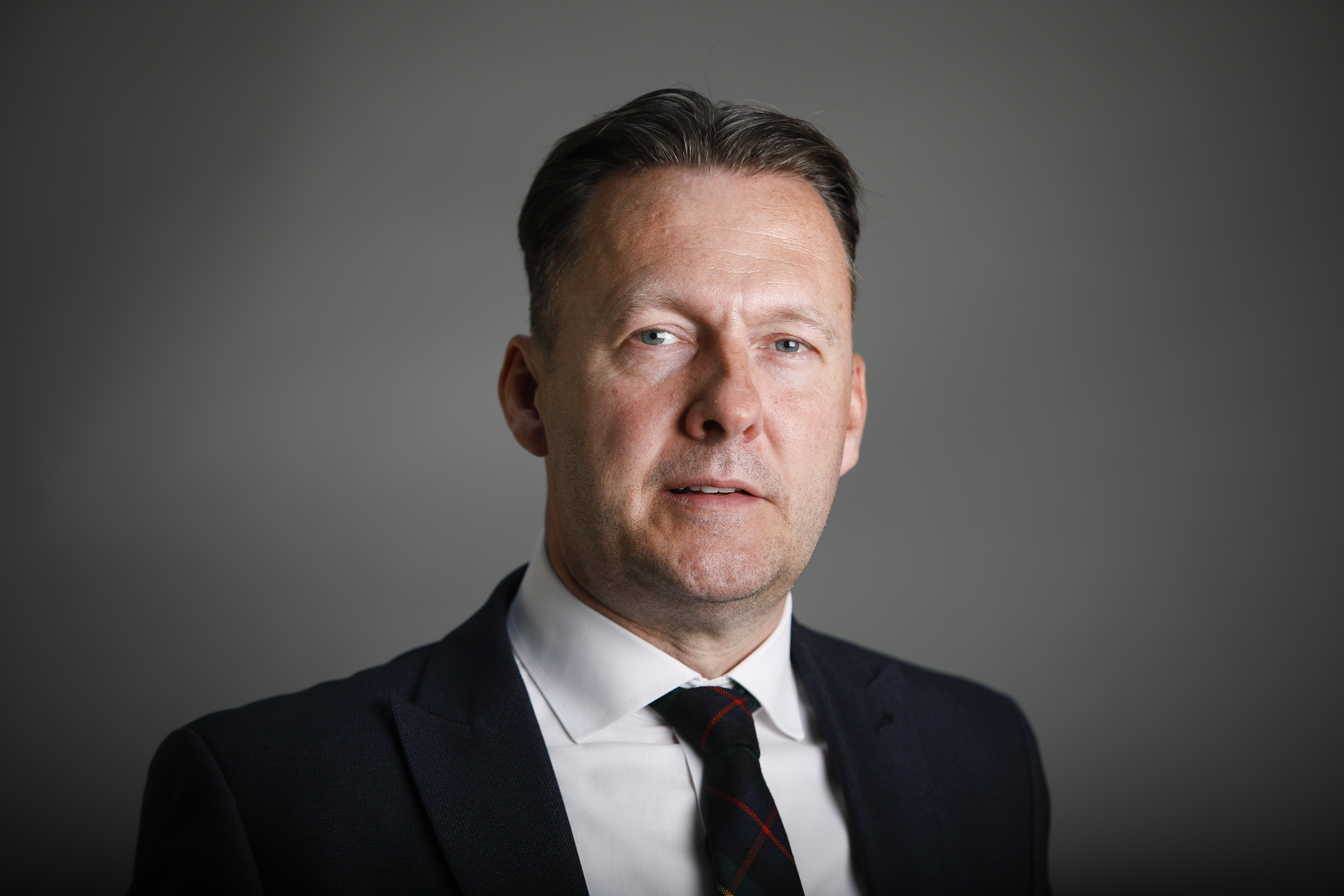
As we approach the 10th anniversary of our national police service, I am pleased to make this statement to the chamber with my reflections on the police reform journey that has been continuing since 2013.
I will also offer my thoughts on Sir Iain Livingstone’s recent announcement that he intends to retire as chief constable of Scotland later this year. Sir Iain will be greatly missed—of that there is no doubt. His contribution to the success of policing in Scotland has been immense and he leaves Scottish policing in excellent health, with the service having been completely transformed over the past 10 years.
Eight local legacy forces have been replaced by one national service, providing a more strategic and consistent approach to policing than there was under the previous system. It is one of the most significant public sector reforms since devolution and it has been a success, which I believe is recognised across the chamber, if not in every part of it.
In 2019, the Justice Committee, which was the Criminal Justice Committee’s predecessor committee, stated its belief that the policy intention to create more equal access to national capacity had been met and should be considered a success story for policing in Scotland. That success has been demonstrated by the successful policing of the 26th United Nations climate change conference of the parties—COP26—in 2021 and operation unicorn in 2022, and by the policing of the Covid-19 pandemic.
Since reform in 2013, £11.6 billion has been invested in policing, and that investment continues. In the most recent budget, the Scottish Government has recognised the importance of policing by investing £1.45 billion in 2023-24. That is an increase of 6.3 per cent—around £80 million—to the Scottish Police Authority resource budget. It provides a stable basis from which to improve the delivery of policing and enhance the safety and security of communities across Scotland.
Despite the United Kingdom Government making cuts to the Scottish Government’s capital budget, we have maintained the police capital budget, which has more than doubled since 2017-18, supporting investment in police assets such as estate, fleet, specialist equipment and information and communications technology.
The money that we put into the police continues to be invested in the workforce. Our officers are the best paid police officers in the UK, with starting salaries for constables at around £5,000 per year more than in England and Wales. There are more officers too: as of 30 September, there were 30 officers per 10,000 of the population in Scotland in comparison with 24 officers per 10,000 in England and Wales.
Our investment has also paid dividends in terms of crime. Sir Iain rightly highlighted Police Scotland’s murder clear-up rate as one of the strengths of the service in recent years. I also point to Police Scotland’s significant role in ensuring that this week’s statistics show that Scotland has one of the lowest levels of recorded crime for any 12-month period since comparable records began in 1974. I believe that those statistics are a credit to the hard-working officers and staff of Police Scotland.
Before I look to the future, it is worth reflecting on the legacy of the longest-serving chief constable of the UK’s second biggest force. No operation was bigger than COP26, when the eyes of the world were on Glasgow. We hosted hundreds of world leaders and dignitaries, among thousands of delegates who descended on the city. Under Sir Iain’s leadership, demonstrations were policed in the traditions of Scotland’s policing, ensuring that legitimate protest could be undertaken fully and safely.
Scotland’s rights-based system of policing, coupled with Police Scotland’s engagement with activist groups and an overriding commonsense approach, resulted in fewer than 100 arrests linked with the event. Those are staggering numbers, given the scale of COP26.
More recently, Sir Iain can rightly be proud of the sensitive and effective operation that was put in place following the death of Queen Elizabeth. Perhaps above all, it is Police Scotland’s response to the Covid-19 pandemic that has rightly been praised, as officers took a measured and proportionate rights-based approach to their handling of an unprecedented crisis. As with our health professionals, police were at the forefront in keeping us all safe, and we owe them our gratitude.
I sincerely hope that members will join me in paying tribute to Sir Iain’s legacy. I was grateful to Sir Iain for his agreement to extend his contract when his initial period of appointment concluded last year. That ensured continuity and stability as we emerged from the pandemic. I think that it has always been clear that, at some point, he would decide to step away from his role. As he himself said last week, he will have been an officer for 31 years by the time he retires. Therefore, although last week’s news is obviously disappointing, it was not necessarily unexpected.
It will be for the Scottish Police Authority to conduct the process of finding Sir Iain’s replacement, but ministers will of course be asked to approve the appointment of his successor. Sitting at Sir Iain’s side has been an executive team that is brimming with talent. Just a few weeks ago, Deputy Chief Constable Jane Connors took up post, bringing with her a wealth of experience from her time with the Metropolitan Police. Several new assistant chief constables have also been appointed as the team continues to evolve. Sir Iain has paid tribute to the stability and leadership of his senior team, and I express my confidence in that continuity as we move towards the final months of Sir Iain’s time in office.
In the meantime, Sir Iain will continue to set Police Scotland’s strategic direction. Last week, the Scottish Police Authority considered a draft revised “Joint Strategy for Policing 2023: Policing for a safe, protected and resilient Scotland”. It builds on the principles in the existing “Joint Strategy for Policing (2020)”, while ensuring that policing in Scotland keeps pace with the challenges and opportunities of modern society.
It is right that, 10 years on, we continue to reflect on what the next steps in the reform journey should look like. In the past decade, we have seen significant changes in the profile of crime and demand, including increasing cybercrime and greater vulnerability. At the same time, there has been an increasing focus on how police respond to important societal issues such as violence against women and girls. We have also seen significant changes in digital technology and in the public’s expectations for how they access services, and those trends are likely to continue and accelerate. We need to plan for the future and ensure that policing reflects those trends and changes and is able to respond to future challenges.
Our national vision for justice in Scotland, which was published last year, sets out a transformative vision of the future justice system for Scotland in which Police Scotland will play a vital role. However, I recognise that the public sector faces a challenging budgetary environment, combined with the cost of living crisis and the resultant impact on communities—that is hardly surprising after 13 years of austerity budgeting by the UK Government. Our plan for the future must therefore demonstrate the necessary efficiency and value for money, while continuing to keep the people of Scotland safe and secure.
For policing, that will mean an even greater emphasis on collaboration with other criminal justice agencies—in particular, and where possible, the other blue light services—to ensure that the public receive the most effective and efficient care and protection. It will require a relentless focus on ensuring that police are deployed where they add most value and work efficiently with other agencies.
In setting the budget for the upcoming financial year, the Deputy First Minister was clear on the challenges that lie ahead and that further efficiencies and savings are still required to ensure that Scotland has financially sustainable, person-centred public services.
It will be a time for change—it always is. However, there are a number of constants. As we commemorate the 10th anniversary of our national police service, and as we look forward in the coming months to welcoming a new chief constable of Scotland, we can be sure that the fundamental values of policing—fairness, integrity, respect and human rights—will remain. The purpose of policing that was set out in the Police and Fire Reform (Scotland) Act 2012 remains paramount: to improve the safety and wellbeing of people, places and communities in Scotland.
 link