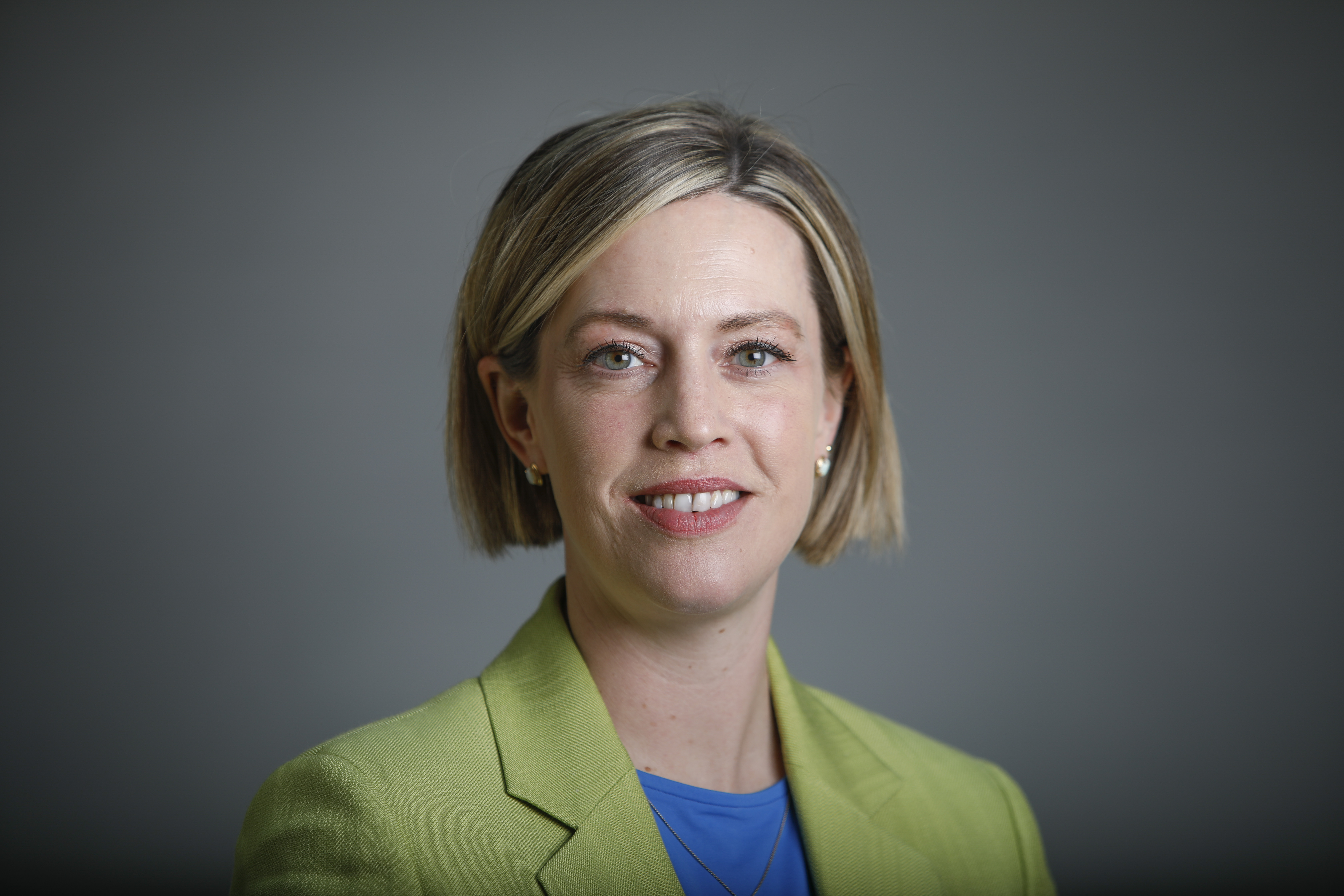
Thank you very much, convener, and good morning. I thank the committee for the opportunity to discuss the SQA's role and performance and the 2019 SQA national qualifications results. We have submitted a paper in advance to inform the discussion.
It was a great privilege to have been appointed to the role of chief executive of the SQA and Scotland's chief examining officer at the end of July this year. As members know, the SQA is the national accreditation and awarding body in Scotland. The Education (Scotland) Act 1996 sets out the SQA’s functions and the governance arrangements that oversee the SQA’s regulatory and awarding responsibilities.
The SQA plays a key role in the education and skills system in Scotland and is committed to working with and across the system to help learners realise their potential and achieve their ambitions. On SQA results day this year, which came early in my tenure as chief executive, I was very conscious of the huge responsibility that the SQA has in relation to young people and their families across Scotland. We take that responsibility very seriously, ensuring that we deliver year on year for learners and assessing our performance against our nine strategic goals.
We have a distinct responsibility to uphold the reliability, accessibility and credibility of Scotland's qualifications system and maintain standards over time. We work closely with others right across the system—from schools, colleges, employers, training providers and universities to industry, professional bodies, national bodies, teaching unions and Government. We very much value those partnerships, working towards our shared goal of delivering a first-class education and training experience for our learners.
On 6 August, 133,000 learners across Scotland received their results across a wide range of qualifications, from national 2 to advanced higher, awards for skills for work courses, national progression awards and national certificates. The results represent the culmination of learning by Scotland's young people, supported by educators, parents and carers. Those young people are to be congratulated on their achievements.
Some variation of attainment is to be expected between subjects and over time, and in 2019 there was an increase in the attainment rate at national 5 and a decrease in the attainment rate at higher and advanced higher.
High-quality learning and teaching remain a fundamental component of the successful delivery of qualifications to ensure that candidates are well prepared across all aspects of every course that they undertake. The SQA will continue to work with teachers and lecturers and with schools and colleges to support them in the delivery of our qualifications for the benefit of young people across Scotland. We will identify any additions to our programme of continuous professional development for teachers and lecturers.
It is worth highlighting that we have started publishing the course reports for all national qualification subjects that were delivered in the 2018-19 session. Those reports, which will be available on each subject's webpage, provide qualitative information on the performance of the assessment components of the course, with a focus on areas that candidates performed well in and areas that candidates found demanding. The reports also include detailed advice and guidance on preparing candidates for future assessment. Information on the grade boundaries that were set for each course is also provided. The reports are intended to be constructive and informative and to promote better understanding of the standards required for course assessments.
We also run a co-ordinated programme of support to help teachers and lecturers understand the requirements of the revised assessments at advanced higher.
I acknowledge that, in the past, the committee has criticised the SQA for its engagement with teachers and lecturers. Our submission provides some detail on how we have sought to respond to the committee’s recommendations—in particular, around ensuring that our engagement and communication are effective and respond to the needs of teachers, parents and learners.
Of course, we need to keep our engagement under close review, particularly as we implement further changes. I am heartened by recent work and positive survey results, but there is always more that we can do to ensure that our communications and engagement are as effective as possible. As the new chief executive, I want to ensure that the SQA is seen as a listening and open organisation.
I am proud to lead an organisation of dedicated and committed professionals who have led and delivered a very significant programme of reform of our qualifications system in recent years. We are committed to ensuring that we continue to deliver and work collaboratively with the system for the benefit of learners.
Thank you. I will try to answer all your questions.
 link